
Three Days in Lisbon: Hidden Gems Most Tourists Miss

We visited Lisboa for several days to explore and discover hidden gems, some of which are overlooked by tourists, like Gin Lovers, which we had never seen mentioned by other travel gurus.
If you are planning a trip, you want to ensure you plan and don’t waste your time on things that don’t have value. This post serves as a quick three days in Lisbon itinerary to ensure you hit the must-see spots. As a bonus, we also added plant-based meal stops to the itinerary.
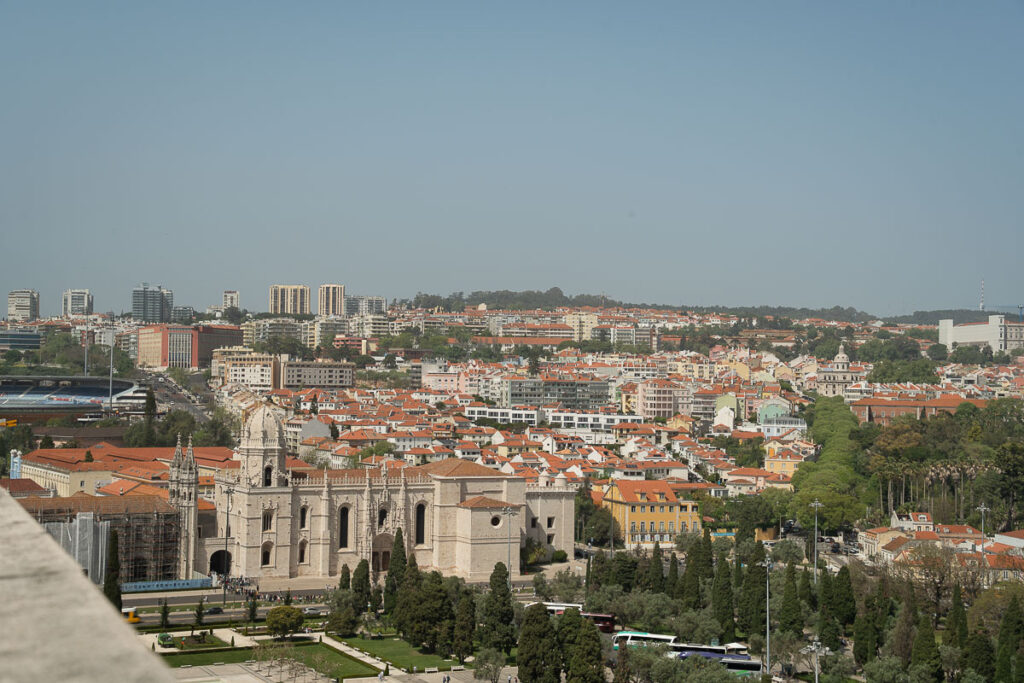
*This post might include affiliate links, meaning I could earn a commission if you buy through my link, without any additional cost to you. But don’t worry because I only recommend products or services I genuinely believe in and think will add real value to you. Affiliate links help me keep this website up and running. Thanks for your support. Read the Privacy Policy for more information.
How to Move Around in Lisbon?
Most of the time, we moved around on foot because the places we wanted to visit were close to one another. However, we used rideshare in some places where the train/tram or walking was not convenient, and we listed them below.
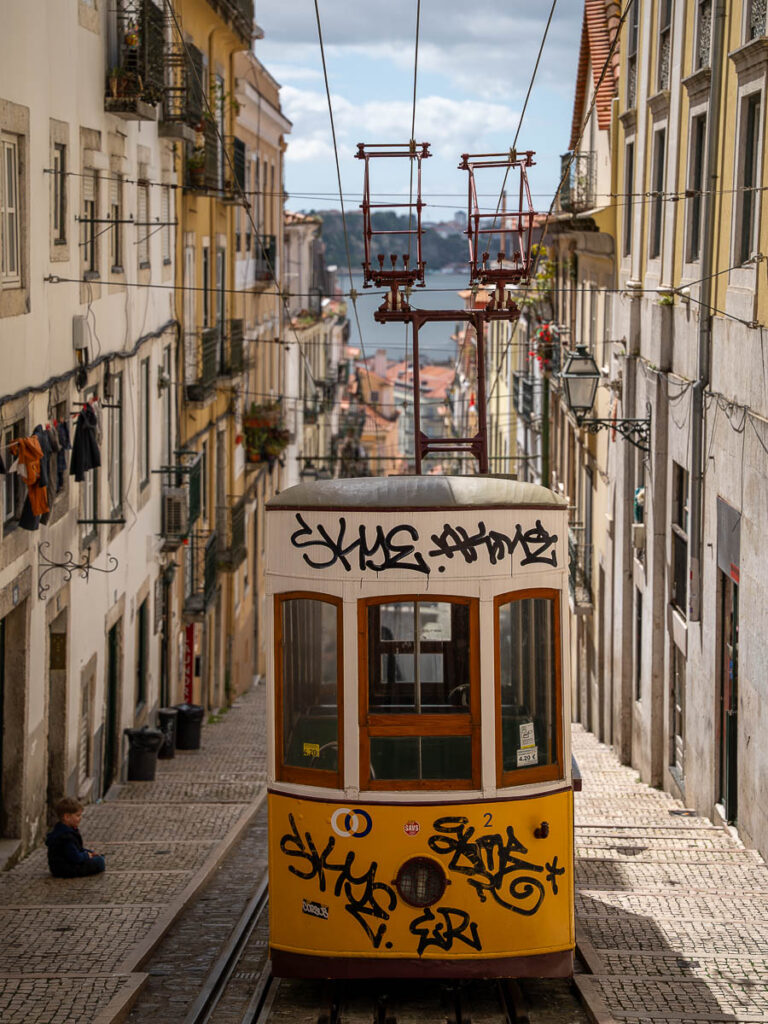
We typically used Uber instead of Bolt (the local company) because it was quicker and more reliable. We also purchased the Lisboa Card, which we used for the bus, trams, and free entry to many sites.
Read More: Since Lisbon is such a walkable city, we highly recommend checking out our GPSmyCity honest review an app for DIY walking tours to see exactly how we used the app to build custom, offline routes to navigate this exact itinerary.
Where to Stay in Lisbon?
We stayed in the Baixa district because it is a central location and close to the station that takes you to the airport. If you are looking to add another day to visit Sintra, it’s good to know that the Rossio train station is within walking distance.
Below are our two options we have personally stayed in and recommend, both hotels are located in Baixa:
- Brown’s Central Hotel: A boutique style in the heart of Baixa. They offer a variety of vegan food options for breakfast for an additional cost. To know more about how our stay was, check out my review of Brown’s Central Hotel.
- Art Legacy Hotel: For a more upscale experience, located 5 minutes from the Baixa-Chiado metro, and includes breakfast. Be sure to read my full review of Art Legacy Hotel to help you decide if it fits your needs.
Map of Top Places To Visit in Lisbon in 3 Days
Here’s a map with all the places mentioned in this post, which we prepared for you to have handy for your upcoming visit to Miami.
How to navigate this map: Click the menu icon in the top-left corner to view all pinned locations. To see a full-screen version, click the icon in the top-right corner, or select the Share button to send this map directly to your email for easy access during your trip.
Day 1: Belem and Alcantara
Belem District
Your first day should be in Belem, assuming it is not a Monday, because the Jerónimos Monastery is closed on Mondays. If you want to map out this area in detail, check out our complete guide to the best things to do in Belém to make the most of your day. To get to Belem, we took the 15E bus from the Corpo Santo stop in Baixa to Belem.
1. Jerónimos Monastery
Jerónimos Monastery is a must-visit for architecture enthusiasts and probably the most popular place to visit in Lisbon. The monastery has been a UNESCO World Heritage site since 1983. You will find incredible Manueline design.
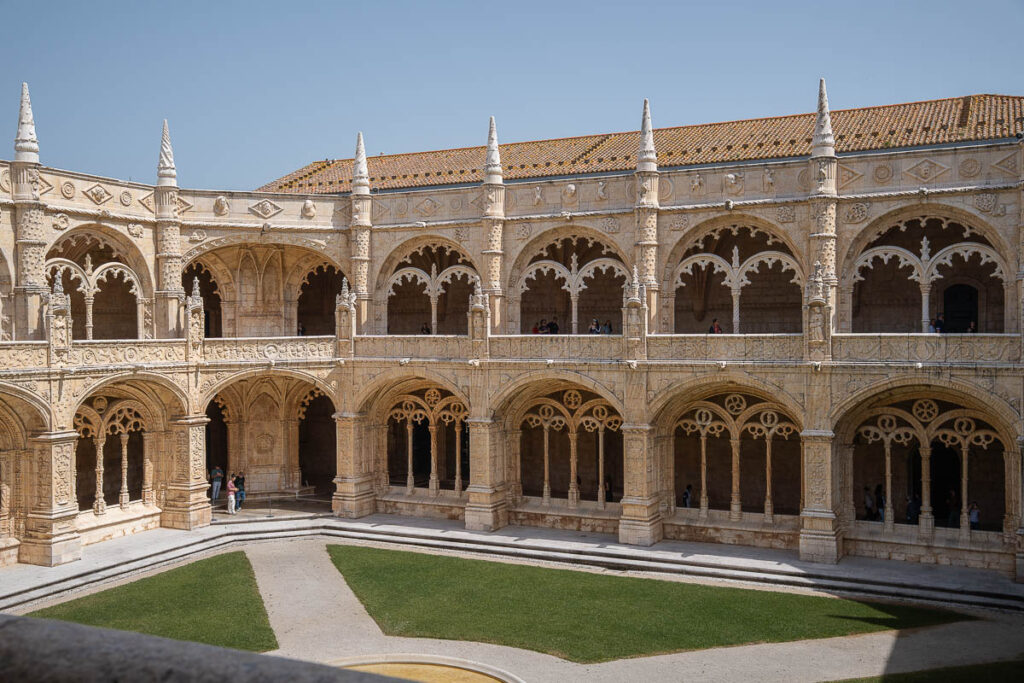
The outstanding feature is the cloister, which is incredibly built using Manueline design. This cloister used to be used by monks as a serene place to pray and meditate.
The monastery consists of the cloister with several rooms and the tombs of notable people, like the poet Luís de Camões, and also the Church of Saint Mary of Bethlehem.
- Cost: Starting at approximately $37. This skip-the-line e-ticket includes a digital English audio guide, perfect for uncovering the hidden stories of the site at your own relaxed pace.
- Note: Access is FREE with the Lisboa Card. The Church of Saint Mary of Bethlehem is also free to access.
2. Belem Tower
The Belem Tower is a fortified structure that represents the maritime power of the Reconquista period and the age of discovery. Interestingly, it was originally built in the middle of the Tagus River, but the 1755 earthquake shifted the river, bringing the tower closer to the shore.
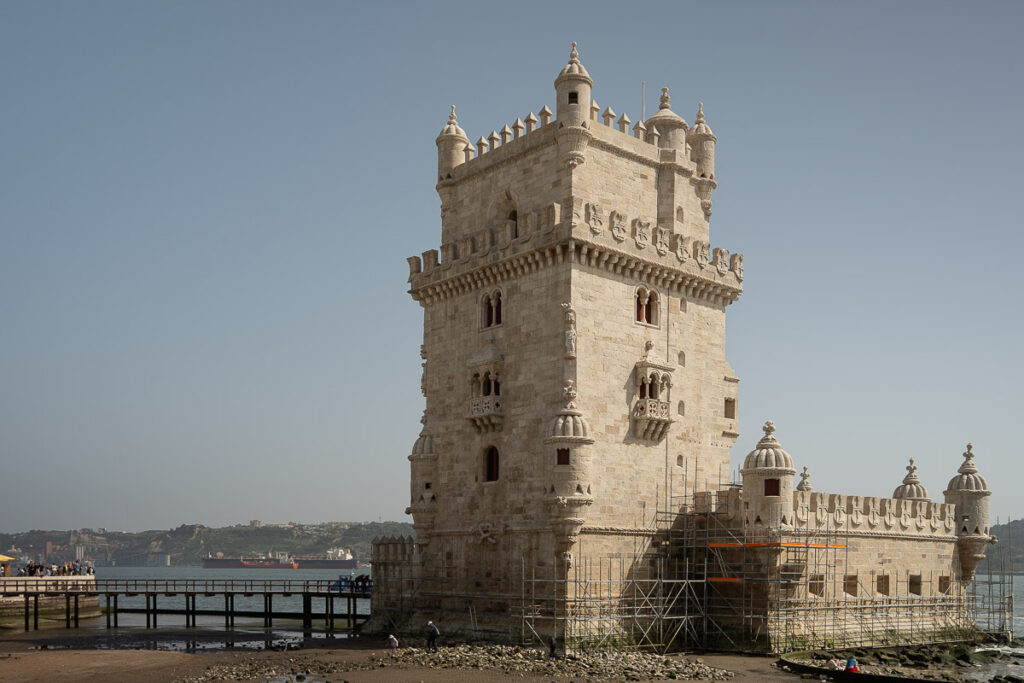
Even if you decide not to enter the tower, the exterior is very ornate and beautiful to see.
- Cost: Starts at $18, but it is FREE with the Lisboa Card.
Note: During our visit, the tower was closed for a major renovation, so we could not get inside. However, most visitors claim it is only worth it to have a better view of the Tagus River.
A better view of Belem, the tower, and the 25th of April Bridge can be done with this popular Lisbon boat experience, which includes a restroom on board and passes by other iconic landmarks located by the river.
3. Discovery Monument (Padrão dos Descobrimentos)
Built in 1940 and reconstructed in 1960 to celebrate the exploration era, it features the great explorers who put Portugal on the map. When you enter, you will have access to the rooftop with stunning views of the Tagus River and Belem on the opposite side.
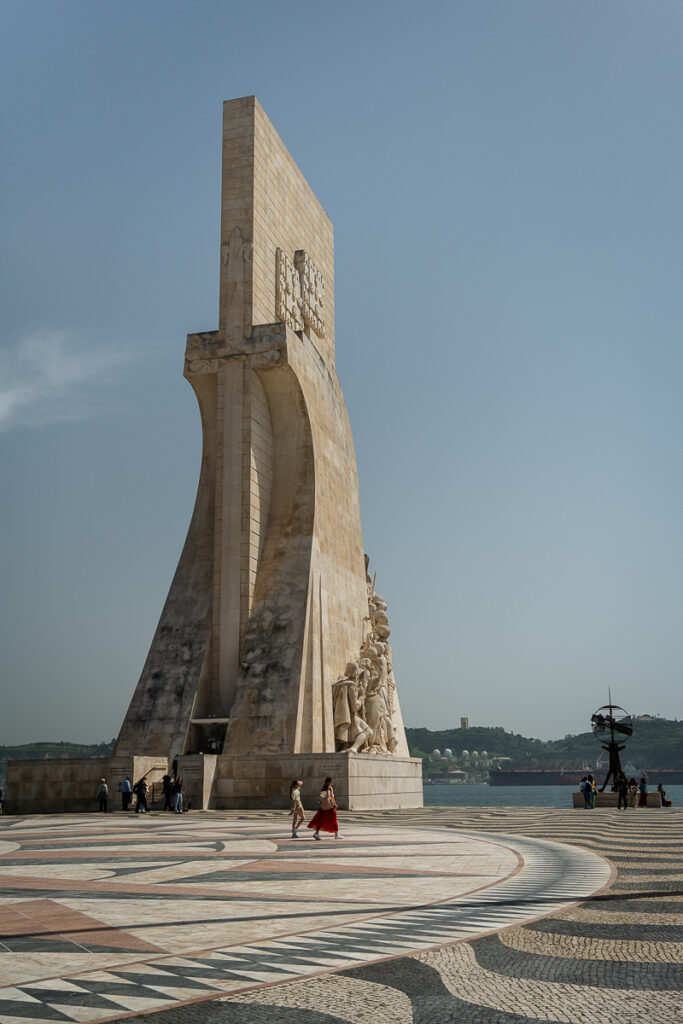
- Cost: You can appreciate the exterior of the Monument for free, but you can also buy a ticket to enter the Discovery Monument and have access to the rooftop starting at $11.66. It is FREE with the Lisboa Card.
4. Lunch: Mexijitos – Cantina TexMex
Finding plant-based food in Belem is difficult, and Mexijitos was a lifesaver. It is a food truck in Praça do Império in front of the Jerónimos Monastery, with a patio setting featuring chairs, tables, and umbrellas in front of the food truck.
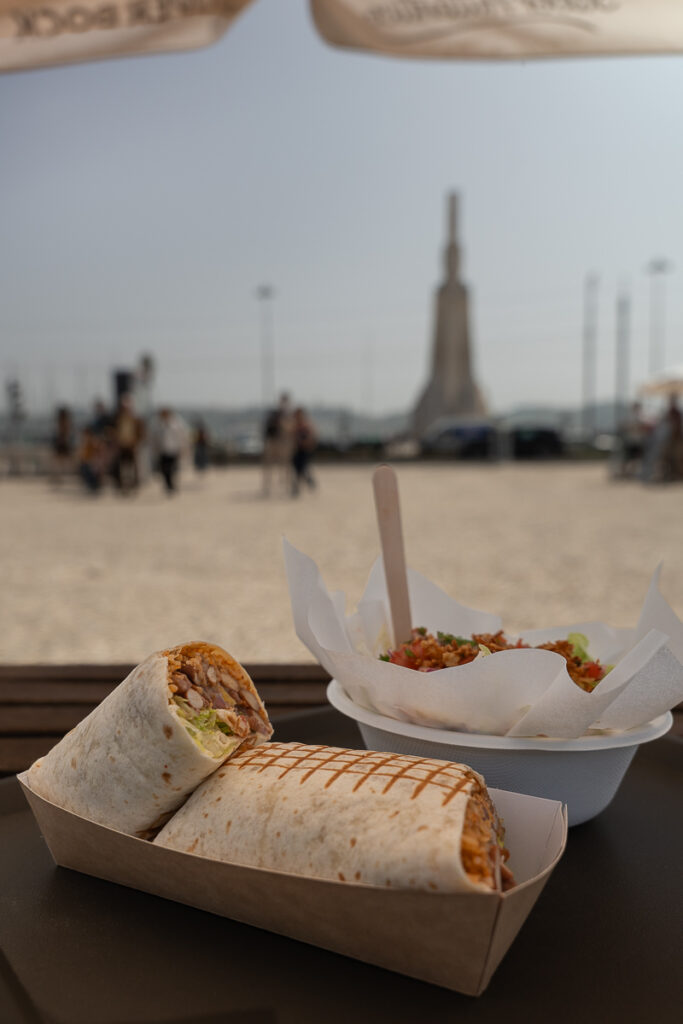
The portion sizes were super decent and used several fresh ingredients. Mexijitos is not fully plant-based, but they offer dishes that can be customized to a vegan option.
Alcantara District
To get from Belem to Alcantara, cross the pedestrian bridge in MAAT – Museum of Art, Architecture and Technology and take the train at the station Altinho (MAAT), stopping at Estação Sto. Amaro. Alternatively, you can take an Uber.
5. The 25th of April Bridge
On your way to Alcantara, you’ll see the 25th of April Bridge, a suspension bridge that connects the heart of Lisbon with Almada.
It looks similar to the Golden Gate Bridge in San Francisco due to its red color, but besides vehicular traffic, it features a railway for trains underneath.

The bridge has a special meaning to locals because it marks the date Portugal transitioned from a dictatorship to a democracy.
This bridge can also be viewed from the water. The popular boat experience mentioned earlier at Belem Tower sails under the bridge, where you can get beautiful views and Instagrammable photos.
6. LX Factory
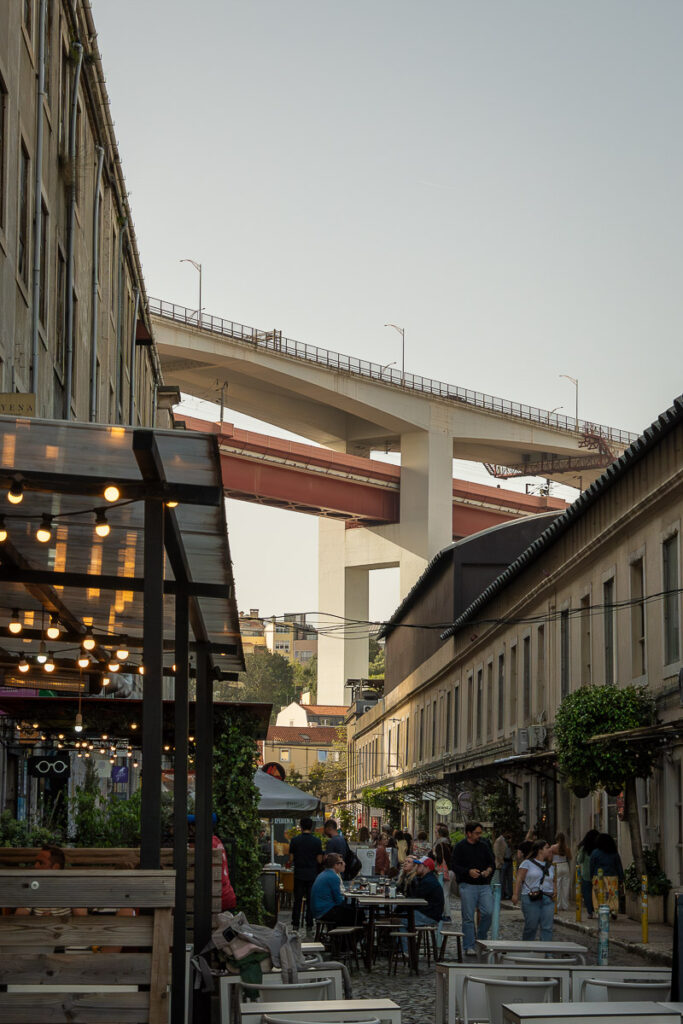
The LX Factory is a gipsy style hub that has been used as a complex industrial area since 2008. It reminds me of the Wynwood Walls in Miami, USA, which also used to be an abandoned industrial zone.
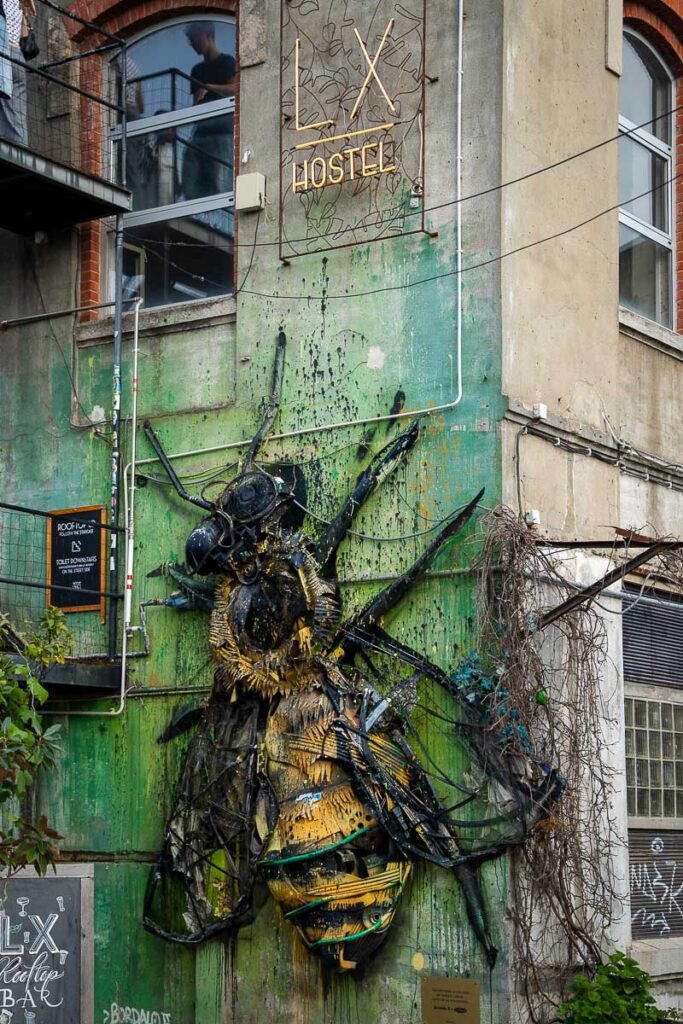
It is a beautiful area full of murals that tell the story of the LX Factory transformation, vintage clothing stores, and handmade jewelry stores. It is also a place where several events are hosted, and it is free to visit. It’s a good stop to enjoy a few cocktails as the area is full of restaurants, bars, and shops.
One of the highlights of the LX Factory is Ler Devagar, which in Portuguese translates to “read slowly.” It is a two-story library in the heart of the LX Factory with walls covered with books from bottom to top.
Look for the iconic metal bicycle hanging—the most photographed item in the bookstore. They have books in Portuguese and English, plus an area with painted art and vinyls for sale.
7. Dinner: Legumi Sushi
To close your day, we recommend visiting Legumi Sushi. Located in the residential Estrela district, which is a local, mostly residential district where you will not find the tourist crowd.

It’s on your way back to the historic district (assuming you’re staying there as recommended). It is a 9-minute drive from the LX Factory, and we took an Uber here because the streets are very hilly; even though it looks close on a map, the hills and steps make it a far walk.
This cozy restaurant is well worth a visit because it is fully vegan and offers several gluten-free sushi options.
Day 2: Baixa and Alfama
Baixa District
Baixa District is one of the flatter districts, making it easy to move on foot. Assuming you are staying in any of the recommended hotels or close to them, you don’t have to worry about transportation to explore Baixa District.
1. Praça do Comércio
Praça do Comércio is one of the biggest plazas in Europe and is part of the National Monument of Portugal due to its meaning to Portuguese history. It is a busy year-round and gives you stunning views of the Tagus River.
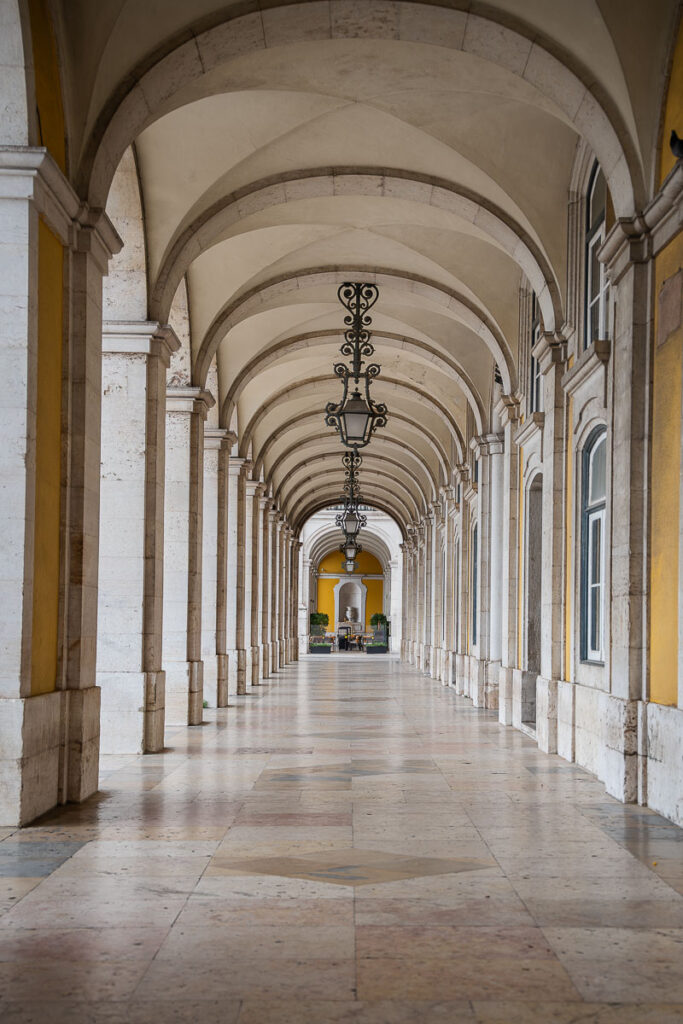
The current location of the Praça do Comércio used to belong to the site of the Ribeira Palace (the main royal residence) before the earthquake.
After the earthquake, the king relocated his residence to Belem and rebuilt this area for the plaza. It is home to the King José I statue, the king of Portugal at the time of the earthquake, honoring his leadership in rebuilding Lisbon.
2. Rua Augusta Arch
Right in front of the Praça do Comércio, you will spot the Rua Augusta Arch, which connects the plaza to the famous Rua Augusta. The Rua Augusta is a pedestrian street of about eight blocks long, full of bars, restaurants, cafes, and souvenir stores.
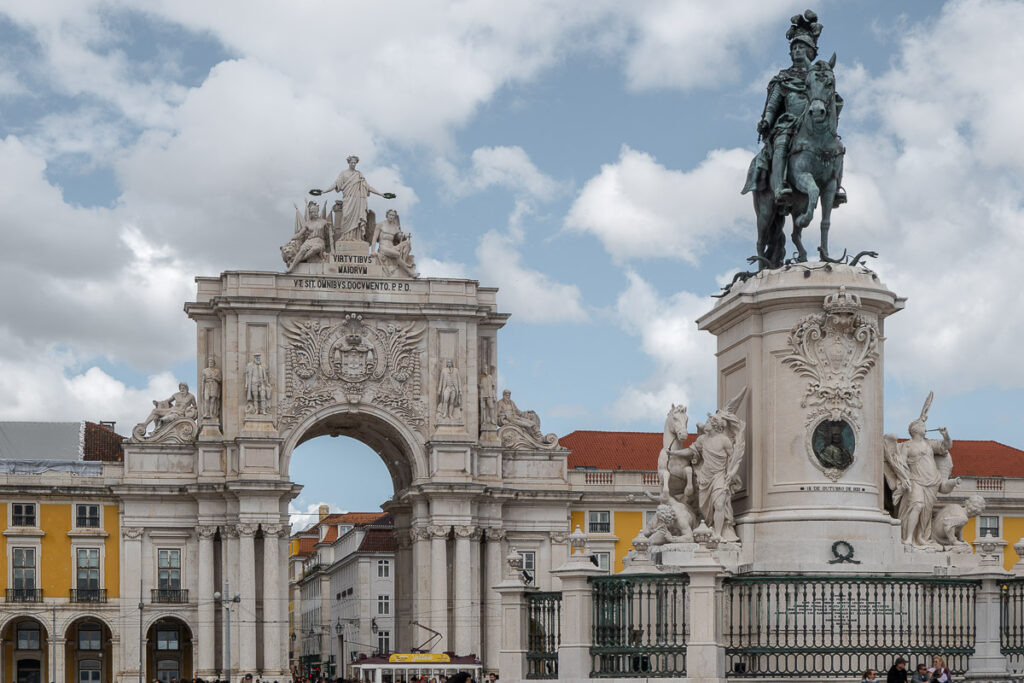
Besides admiring the arch from the ground level, you can get on the rooftop of the arch to have a stunning view of the Praça do Comércio, the river, and the Baixa district. You can even see the 25th of April Bridge from the rooftop of the arch.
Inside the arch, you will find an area with information about the history of the arch when it was built, and a sneak peek at the mechanism that runs the clock, which makes the top bell ring every hour.
Note: You will have to take the caracol (spiral) steps here. The cost to access inside the Augusta Arch starts at $6.
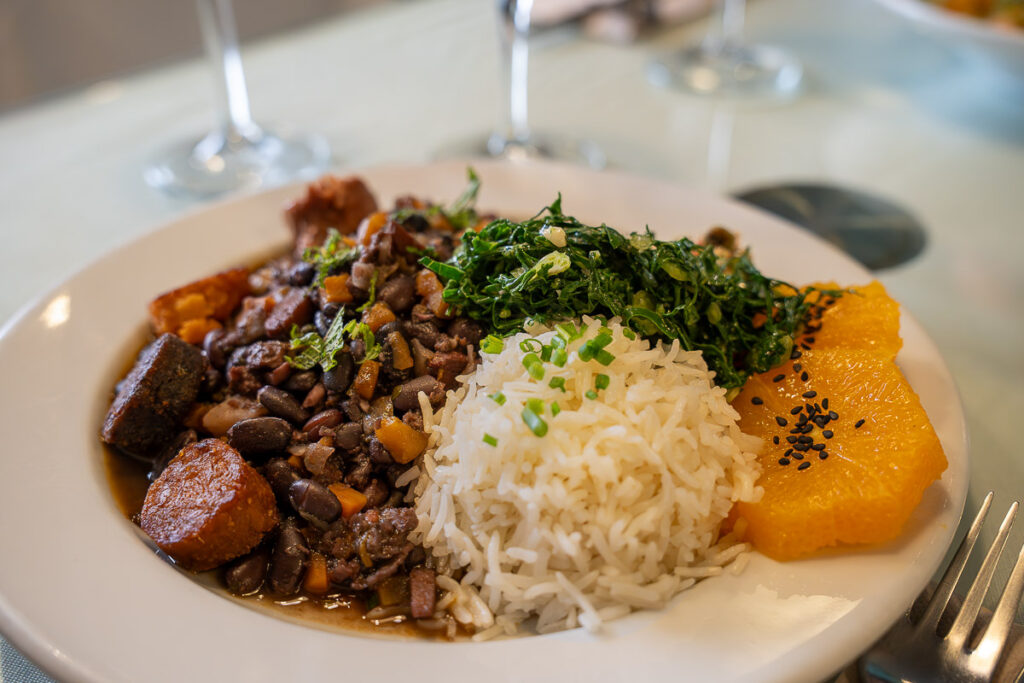
3. Lunch: Organi Chiado
We don’t recommend eating on Rua Augusta because there are overly touristy restaurants here. But if you walk a 6-minute walk from the arch, you’ll find Organi Chiado, a 100% plant-based restaurant offering fresh ingredients. Check out my experience eating at Organi Chiado restaurant.
4. Santa Justa Lift
The Santa Justa Lift was built to connect Baixa with Chiado for local use. This elevator, made of steel, is famous for its Neo-Gothic iron design.
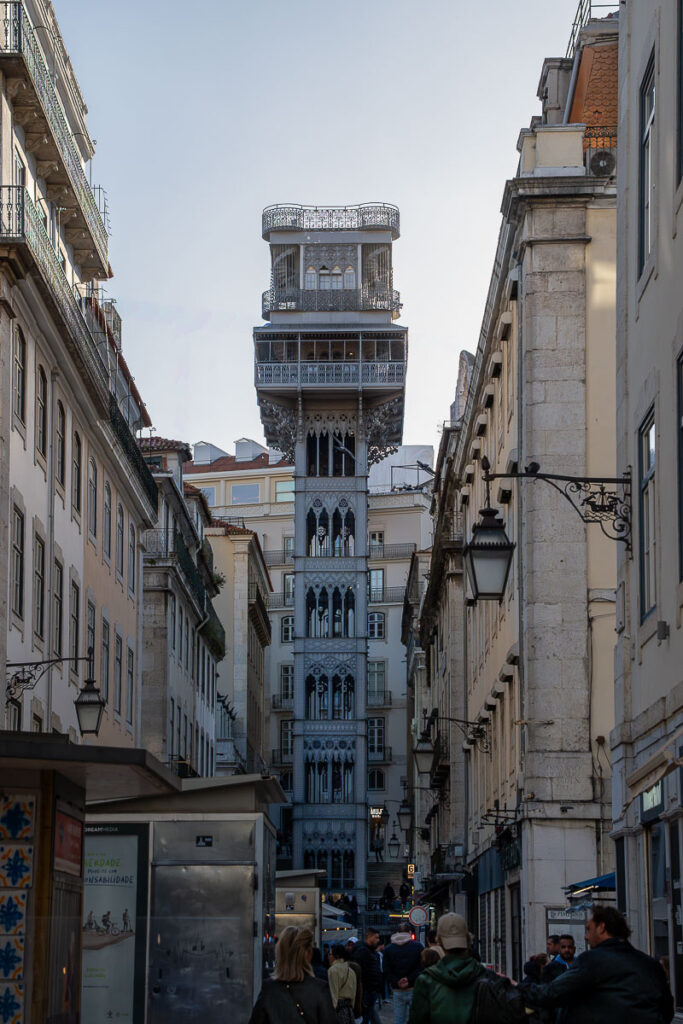
During our visit, it was closed because of the tragic, fatal funicular accident in September 2025, but you can still see it from the exterior.
Alfama District
To get to Alfama, we took bus 737 from Praça da Figueira, which drops you at the Castelo arch. We highly recommend reading our dedicated guide on things to do in Alfama to help you navigate its steep streets, colorful tiles, and historic viewpoints. Another option to get to Alfama is to take a rideshare.
5. Castelo de São Jorge
Castelo de São Jorge is a fort structure that was built by the Moors in the mid-11th century to protect Lisbon. Not only will you explore this incredible castle, but you will also have some of the best views of the city.
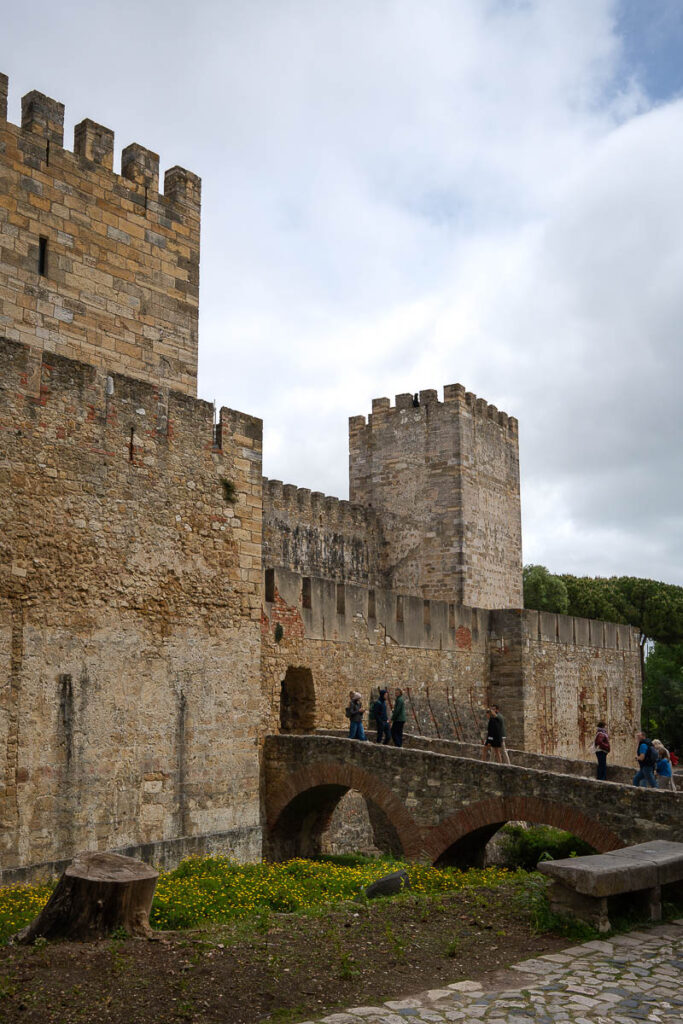
Access is FREE with the Lisboa Card. Without the Lisboa Card, you will have to purchase a ticket, which starts at $30. (Ensure you book ahead and buy a ticket in advance because, just like the monastery, it is a popular landmark.)
This popular skip-the-line e-ticket to Castelo de São Jorge includes a digital audio guide. If you book it, don’t forget to download the app ahead of time and bring your own headphones for the best experience
6. Lisbon Cathedral (Sé de Lisboa)
The Lisbon Cathedral, also known as the Sé de Lisboa, is the oldest church in the city, featuring a Romanesque façade with an interior Gothic architecture.
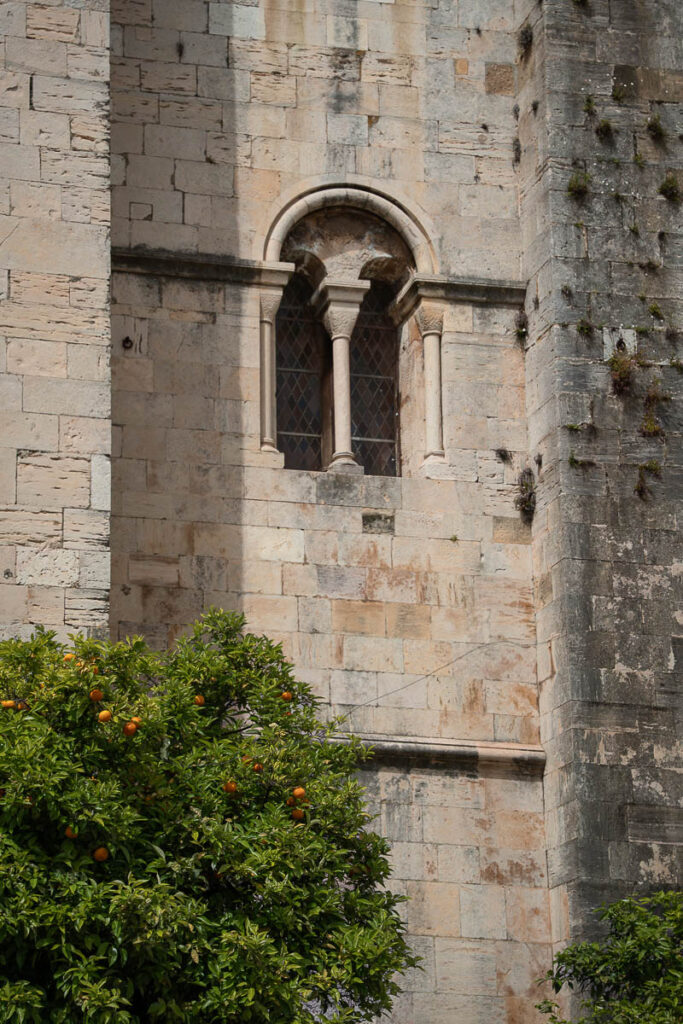
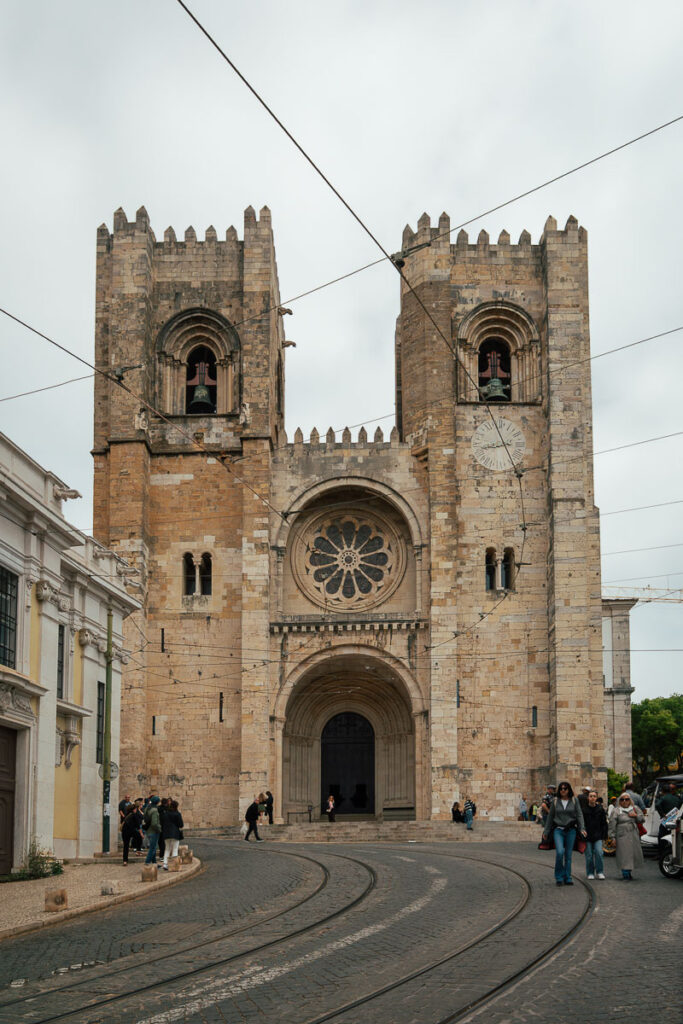
The church is one of the few structures that survived the earthquake and the following fires. Inside, besides the chapel, there is also a cloister with a similar architectural style to the Jerónimos Monastery cloister covered above.
Access to the church is free, but the visit to the cloister and the treasury rooms on the second floor (displaying historical jewelry and dresses) requires a ticket starting at $8.
7. Dinner: Al Sanprieto
Your last stop on the second day is a dinner at Al Sanpietrino Trattoria. To get there, we took an Uber because we were tired from the day, but if you still have energy, it is a 15-minute walk.
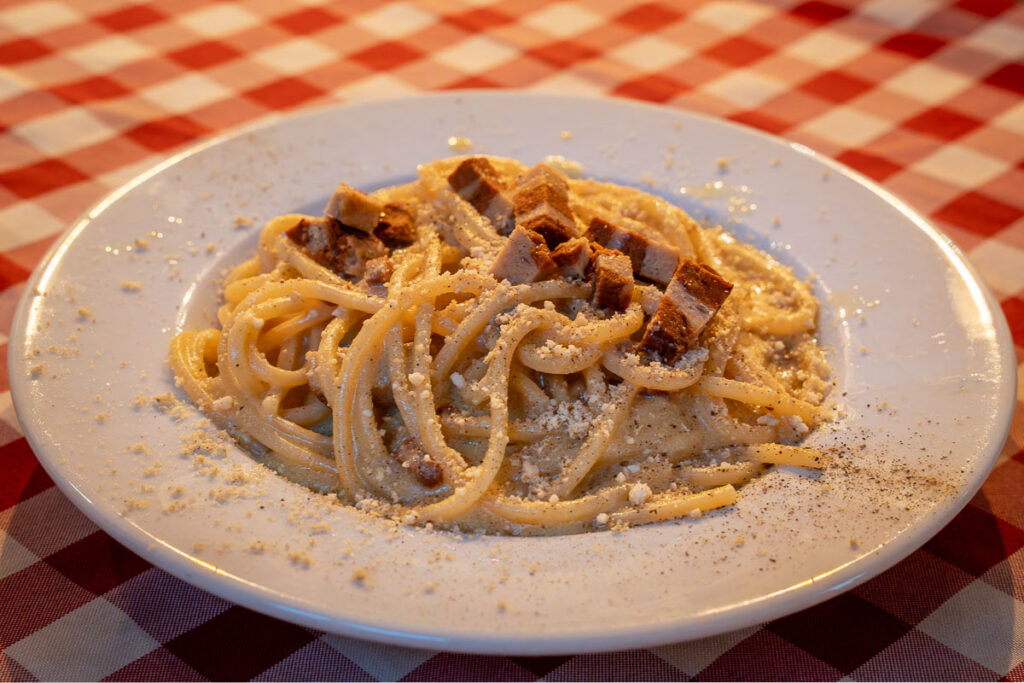
This restaurant is super popular because it is the first 100% plant-based Italian restaurant in Lisbon. They offer several homemade pastas (and even gluten-free ones), and their sauces are heavenly creamy.
Note: We highly encourage you to reserve in advance. View availability and make your reservation at Al Sanpietrino Trattoria here.
Day 3: Chiado, Cais do Sodré & Príncipe Real
Chiado District
Since we were staying in a hotel in Baixa, we walked to get to Chiado using the stairs next to the Baixa-Chiado station.
Pro tip: Another quick way to get to Chiado is by entering the Mango clothing store and using the elevator to the fifth floor to reach Rua Garrett.
1. Carmo Archaeological Museum
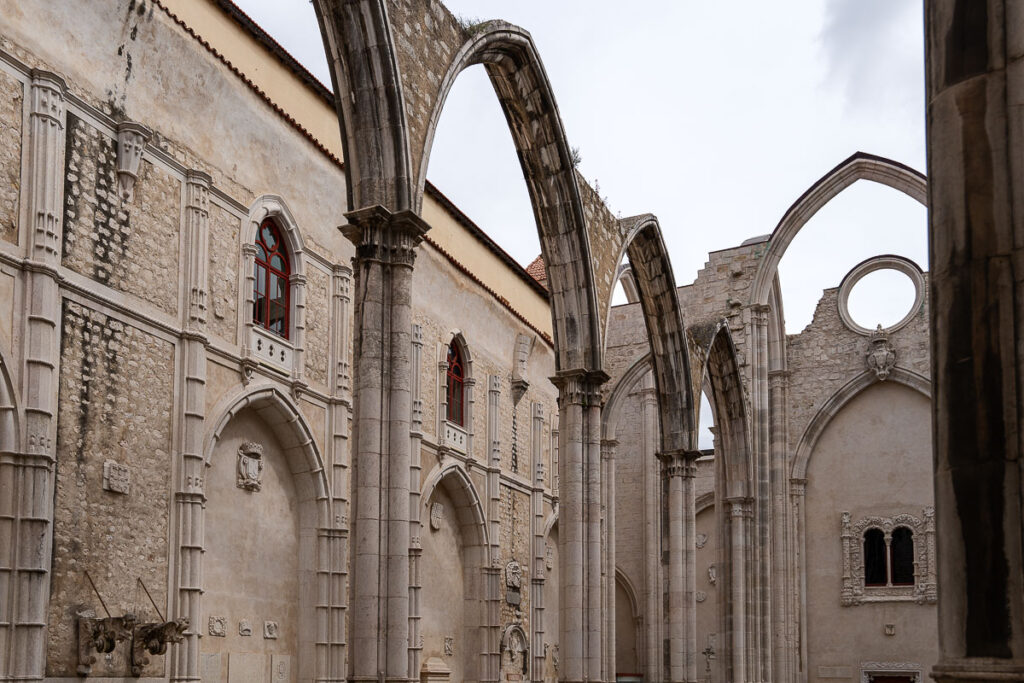
The Carmo Archaeological Museum used to be a Gothic church called Igreja do Carmo, which was destroyed in the 1755 earthquake. The walls and columns were reinforced following these sad events, but the roof was never rebuilt, and the remains of the church are impressively stunning.
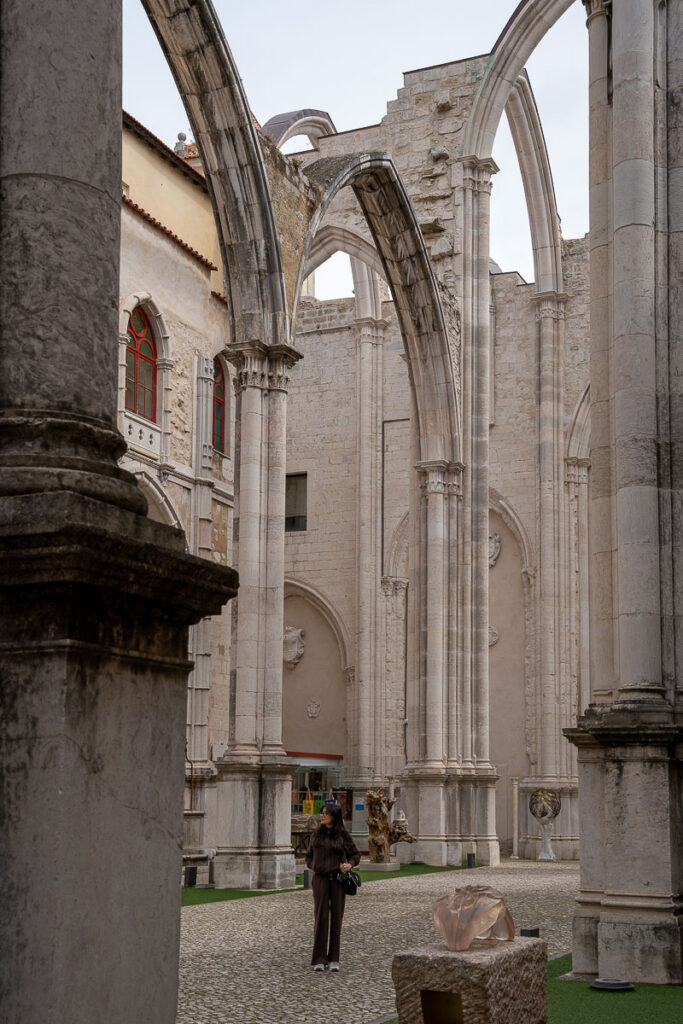
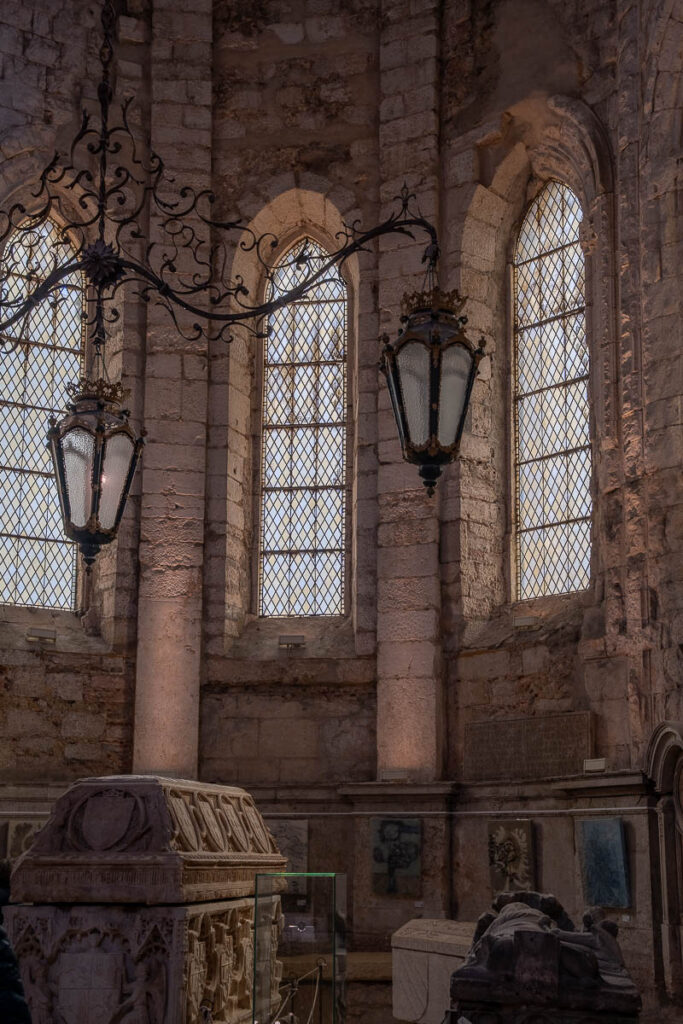
Besides the church, the visit also includes access to the Archaeological Museum, where you will explore prehistoric artifacts and even a short movie explaining the history of Lisbon during the earthquake event.
Cost: Tickets start at approximately $8. If you have the Lisboa Card, you will receive a discount on your admission. We purchased our tickets directly at the museum on the day of our visit.
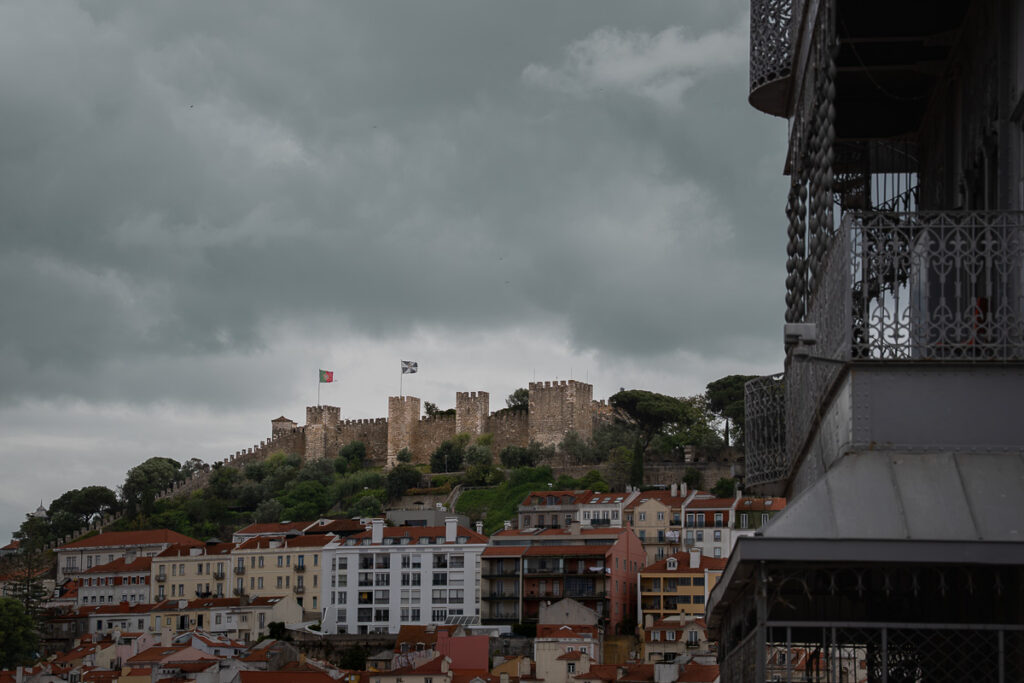
Pro Tip: When you are done visiting the Carmo Archaeological Museum, walk to the back of the building to see the Santa Justa Lift from the upper side and the iconic view of Castelo São Jorge.
Cais do Sodré District
After exploring Chiado, we moved to Cais do Sodré to explore more. To get there, we took a rideshare.
Another option is to get to Limoeiro station and jump on the 28E tram and stop at Lg. Academia Nacional Belas Artes, but we don’t recommend it because the 28E tram is notoriously known for long queues and even pickpockets.
2. Pink Street
Pink Street is one of the most Instagrammable spots in Lisbon. This street, with the floor painted pink and hanging colorful umbrellas, reminds me of the Puerto Plata umbrella street.
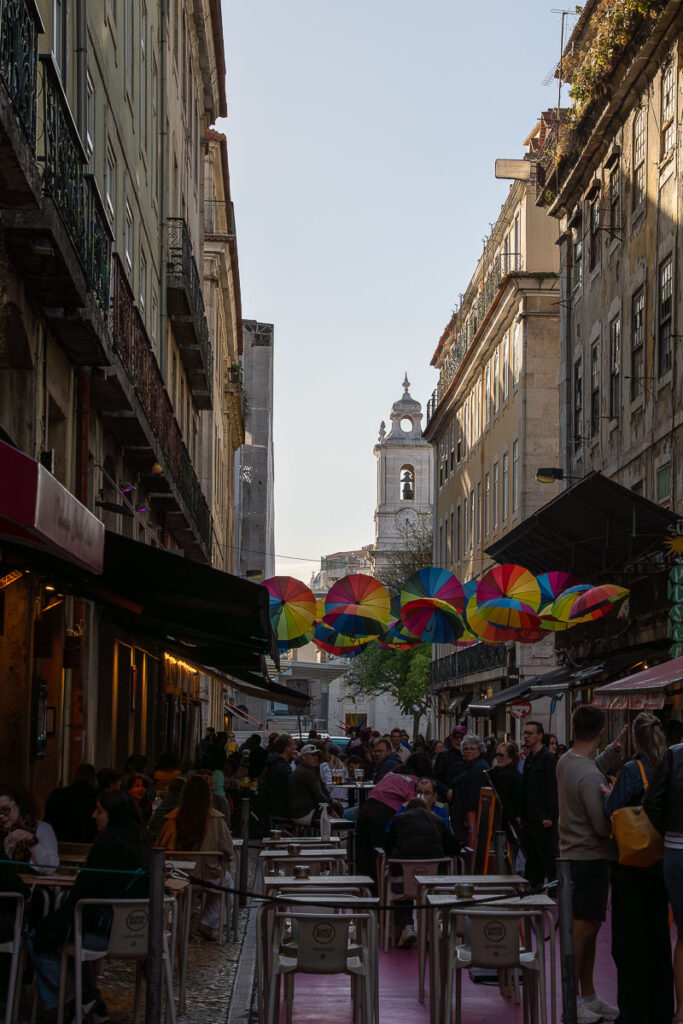
Historically speaking, this street used to be a shady street where gambling, crime, sailors, underground clubs, and prostitution were concentrated.
But it is now full of energy, restaurants, and bars, making it not only a place to get some photos but also a street to explore and enjoy the live energy.
3. Lunch: Kong — Food Made With Compassion
For lunch, we recommend a stop at Kong — Food Made With Compassion, a 100% plant-based restaurant considered #1 in Europe in 2024.
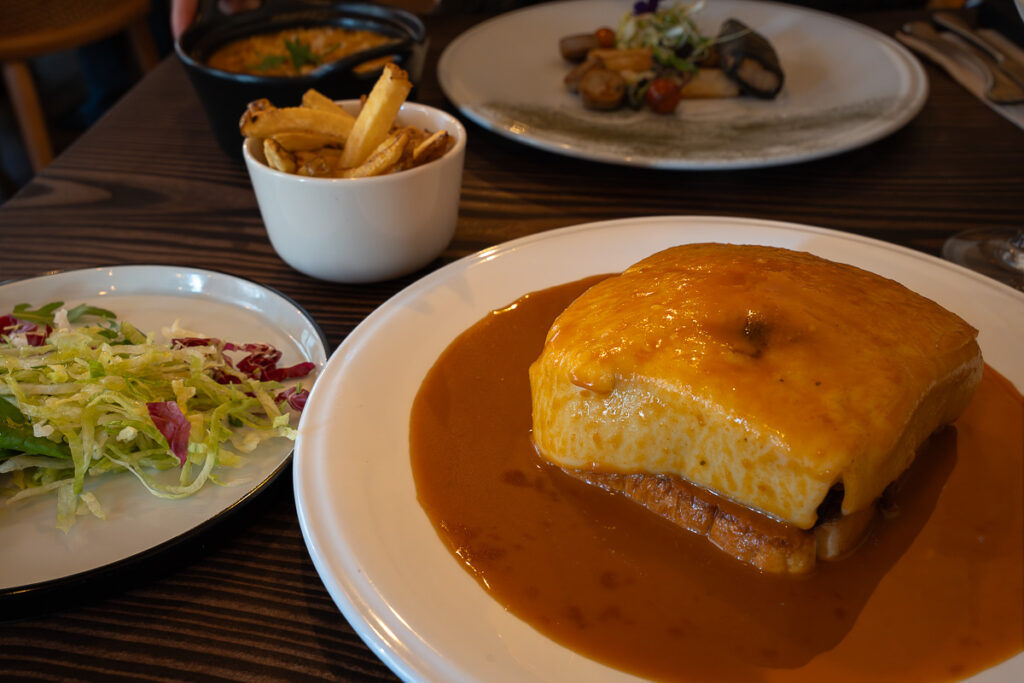
If you visit, don’t forget to try the berry cheesecake, the most flavorful cheesecake we have ever tried. Check out here what we tried during our visit to Kong.
Príncipe Real District
To get to the Príncipe Real district from Kong, you can take the train from Cais do Sodré to Príncipe Real. Or you can do like us, where we grabbed an Uber.
4. Gin Lovers
Gin Lovers is located in the Embaixada Concept Store, a stunning Neo-Moorish palace. This is a place to visit if you are a fan of gin, because they offer a variety of locally produced (homemade) gins; they offer six different types of gin and create different flavors of gin and tonic cocktails.
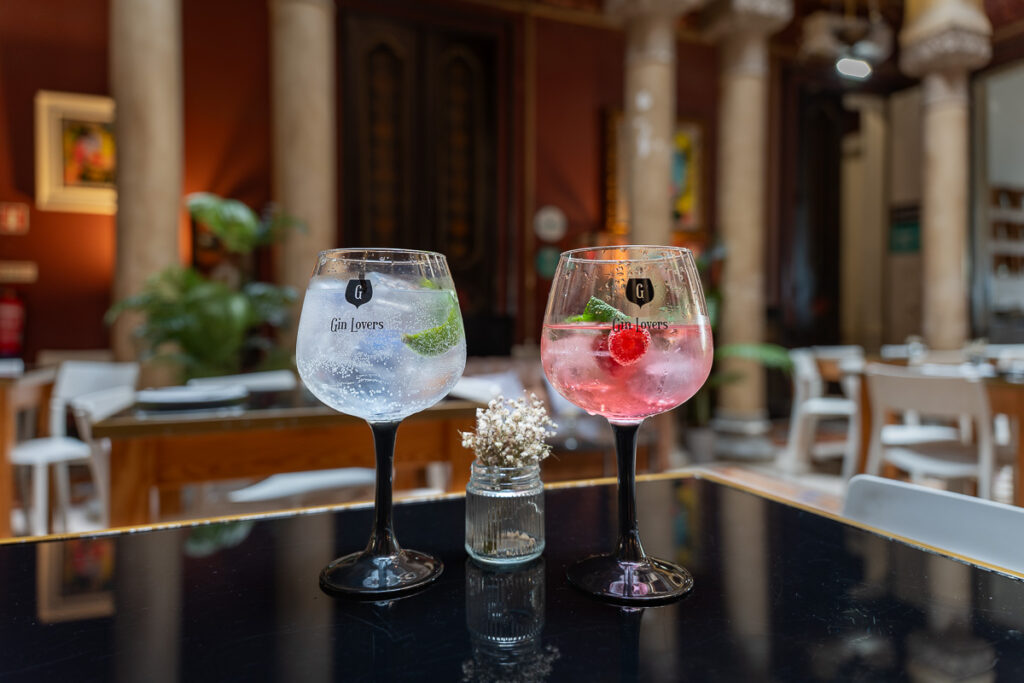
I tried the Bulldog Schweppes Hibiscus Lemon, Lavender perfume, which was refreshing. What started as a group of gin lovers who used to meet to share their love of gin is now this incredible bar-restaurant concept.
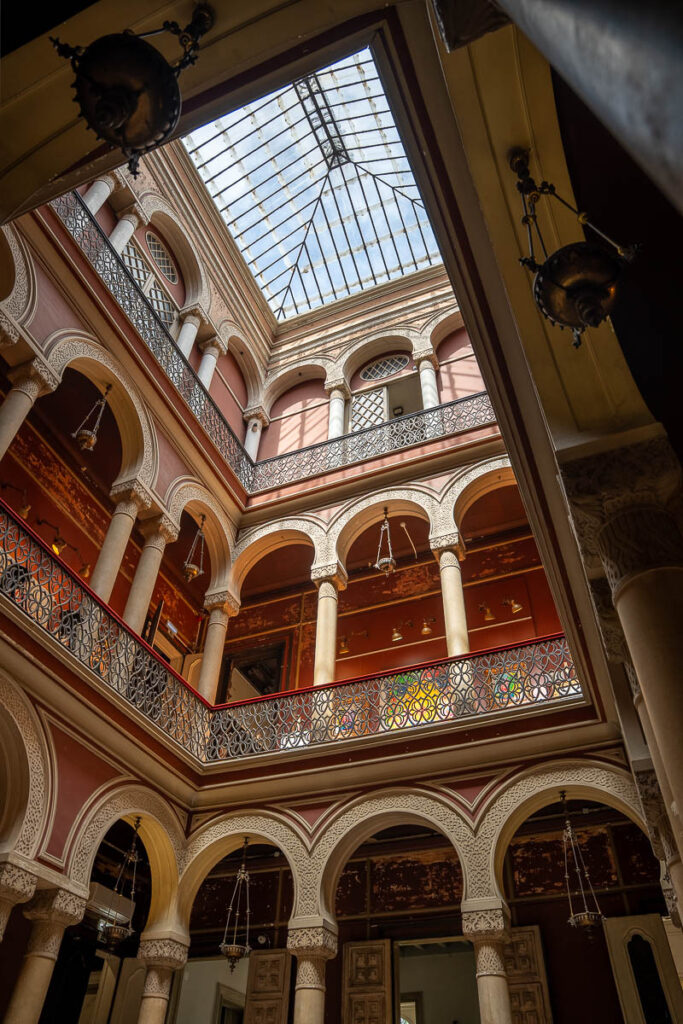
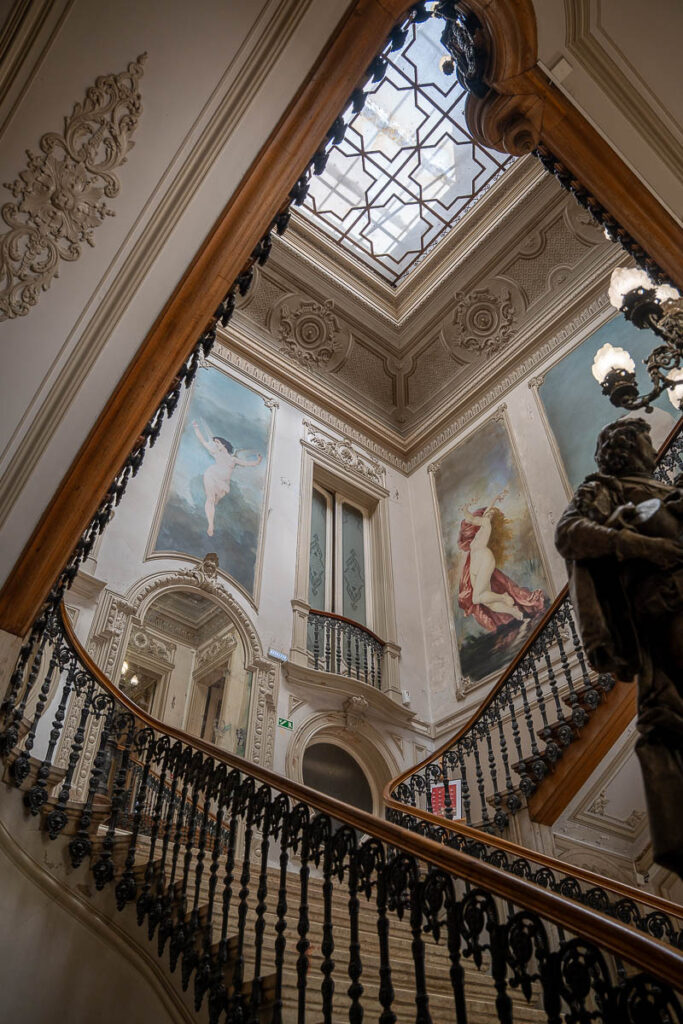
During your visit, don’t forget to explore the building because, besides the gin and tonic, you will find several shops packed with stores for antique clothing and accessories.
5. Dinner: A Minha Avó
The last stop on this 3-day itinerary in Lisbon is a visit to A Minha Avó, which should be a must-stop because they offer a 100% plant-based menu featuring veganized traditional Portuguese dishes.

Check out here what we tried during our visit to A Minha Avó in our vegan guide, where we cover this restaurant in more detail, along with other favorites, including vegan nata.
Final Thoughts on Your Three Days in Lisbon
To close, we detailed this itinerary with the places we believe need to be on your radar for your first visit to Lisbon.
We have already published detailed neighborhood guides to help you dive deeper into these historic areas, including our complete guide to the best things to do in Belém and our walking itinerary of what to see in Alfama. To complete your downtown itinerary, check out our recent guide on Baixa and Chiado.
Found this article helpful? Hover over and save the image below to your Pinterest boards so it’s ready for later. While you’re there, follow me for more inspiration!



The idea of skipping to the “hidden gems” that tourists often miss really resonates with me, as I’ve seen many students in design and architecture overlook the subtle nuances of a city. One practical tip I’d like to add is to explore the local neighborhoods on foot, as this allows you to stumble upon unique spots that may not be listed in guidebooks. I’ve had students who’ve spent time in Lisbon for internships and they’ve always come back with fascinating stories of discovery. The parallel between the city’s historic charm and its emerging status as a hub for innovation is something I have been thinking about because it seems to be an intriguing blend of old and new. As someone who advises students on career paths, I often wonder how cities like Lisbon will balance their preservation of heritage with their growth as modern tech centers, and what implications this might have for the next generation of designers and architects.
Thank you so much for the thoughtful comment! I completely agree, exploring on foot is the best way to uncover the hidden spots you’d otherwise miss.