A Perfect Lisbon Guide: What to do in Baixa and Chiado

When you arrive in downtown Lisbon, you are immediately greeted by an amazing blend of deep historical architecture and contemporary design. In Baixa, you have the historic heart of the city with its remarkable squares, while neighboring Chiado appeals more to café enthusiasts and literature lovers.
During our trip, we made it a mission to discover the hidden gems that first-time travelers often miss, like an impressive church that intentionally left its walls unrenovated after a devastating fire. If you are wondering what to do in Baixa and Chiado, this guide cuts through the noise to help you identify the absolute must-see spots that need to be on your radar for these two incredible districts.
*This post might include affiliate links, meaning I could earn a commission if you buy through my link, without any additional cost to you. But don’t worry because I only recommend products or services I genuinely believe in and think will add real value to you. Affiliate links help me keep this website up and running. Thanks for your support. Read the Privacy Policy for more information.
What to do in Baixa and Chiado
Baixa District
When you visit Lisbon, you will undoubtedly be impressed by the steep hills, but you will quickly notice that the Baixa district is completely flat in comparison to the rest of the city. A visit to Baixa is all about simply wandering the streets, immersing yourself in the lively local atmosphere, and admiring the many beautiful squares.
1. Praça do Comércio and Rua Augusta Arch
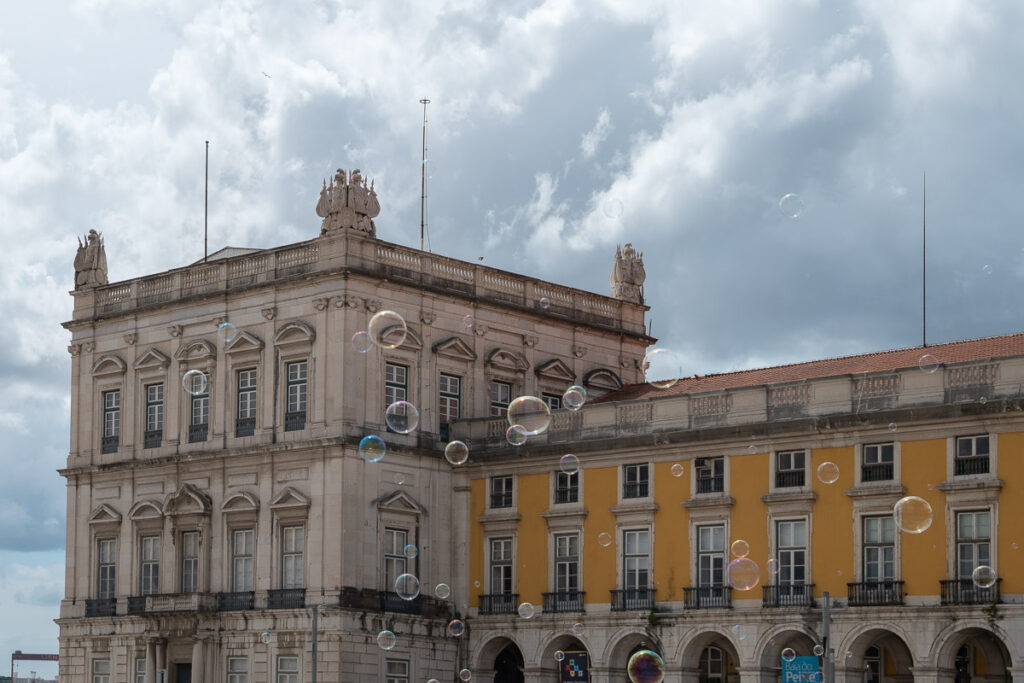
Praça do Comércio is one of the biggest squares in Europe. The square faces the Tagus River and is surrounded by bright, colorful buildings. The square historically served as the center for maritime trade, as well as the location of the main royal residence before the devastating earthquake of 1755.
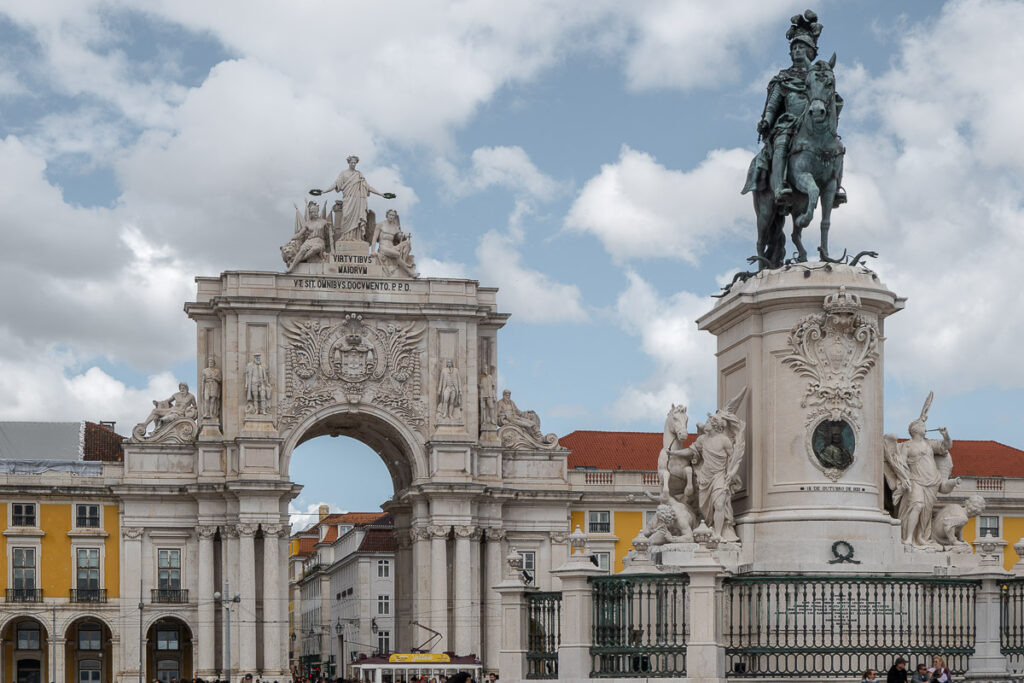
At the end of the square, you will spot an impressive arch, the Rua Augusta Arch, which was built to commemorate the rebuilding of Lisbon after that massive earthquake. Around Praça do Comércio, you will find several cafés and vendors selling souvenirs.
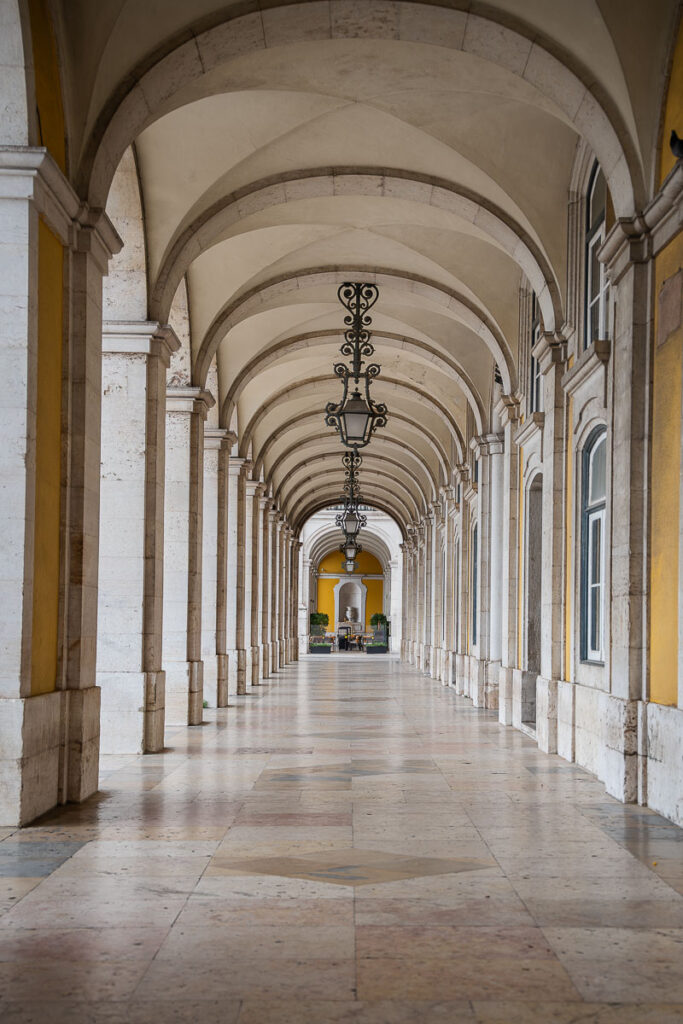
The square is always busy and full of visitors taking photos, and you will likely spot several tour groups learning about the incredible history of this Portuguese national monument.
Note: The Praça do Comércio hosts several tram stations, including the 15E tram we used to get to Belém District. Just a short walk from Praça do Comércio, you can also find the Rua da Conceição stop to catch the famous Tram 28.
2. Rua Augusta
Rua Augusta is a lovely pedestrian street where restaurants set up their seating areas right along the walkway. Besides the restaurants, there are plenty of shops, cafés, and even street performers, making it a perfect place for a stroll.
While you will find a lot of dining options here, we do not recommend eating on this street, as most of the restaurants target tourists and lack an authentic local experience.
Read more: If you prefer shopping for local handmade clothing and unique souvenirs, we highly recommend visiting the Embaixada Concept Store. Here, you can shop while also discovering local gin at Gin Lovers inside a stunning old Neo-Moorish palace.
3. Praça Don Pedro IV (Rossio Square)
Walking north along Rua Augusta, you will reach another expansive square named Praça Don Pedro IV, widely known as Rossio Square due to its proximity to the Rossio metro station.
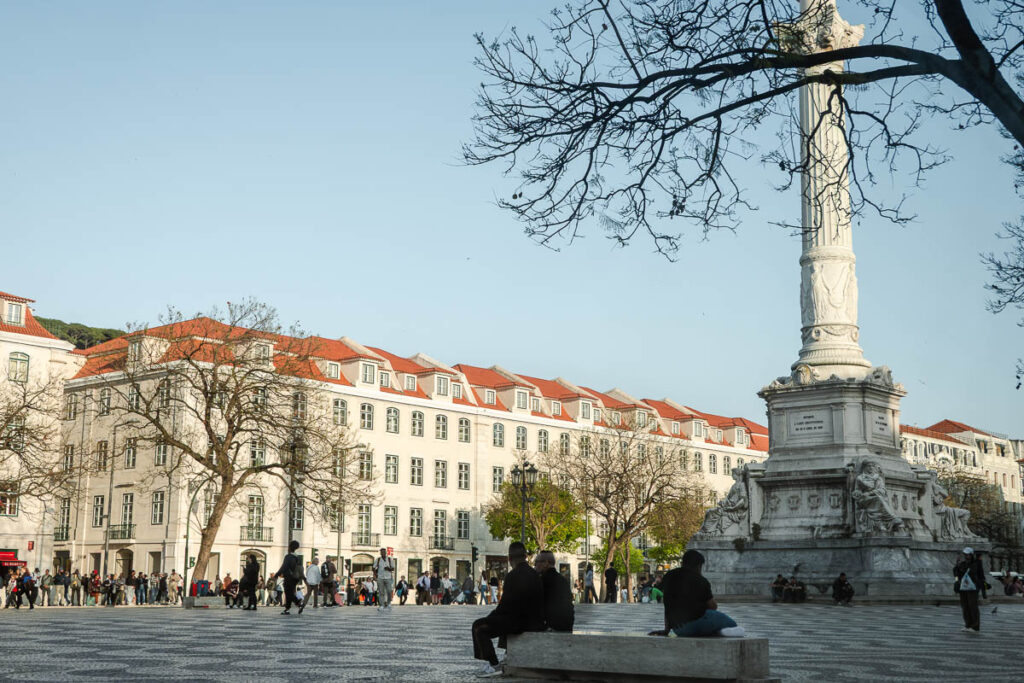
It is a charming, large square featuring beautiful fountains and iconic Portuguese cobblestone flooring laid out in mesmerizing wavy patterns. The atmosphere in this square feels a bit more relaxed, offering a few tree-shaded benches where you can sit back and enjoy the local vibe.
4. Praça Figueira
Praça Figueira is a beautiful square featuring a bronze statue of King John I riding a horse atop a high pedestal. The location of this square actually used to be a hospital, which was tragically destroyed and demolished after the 1755 earthquake. Today, the square is surrounded by buildings, some of which feature emblematic Portuguese tiles on their facades.
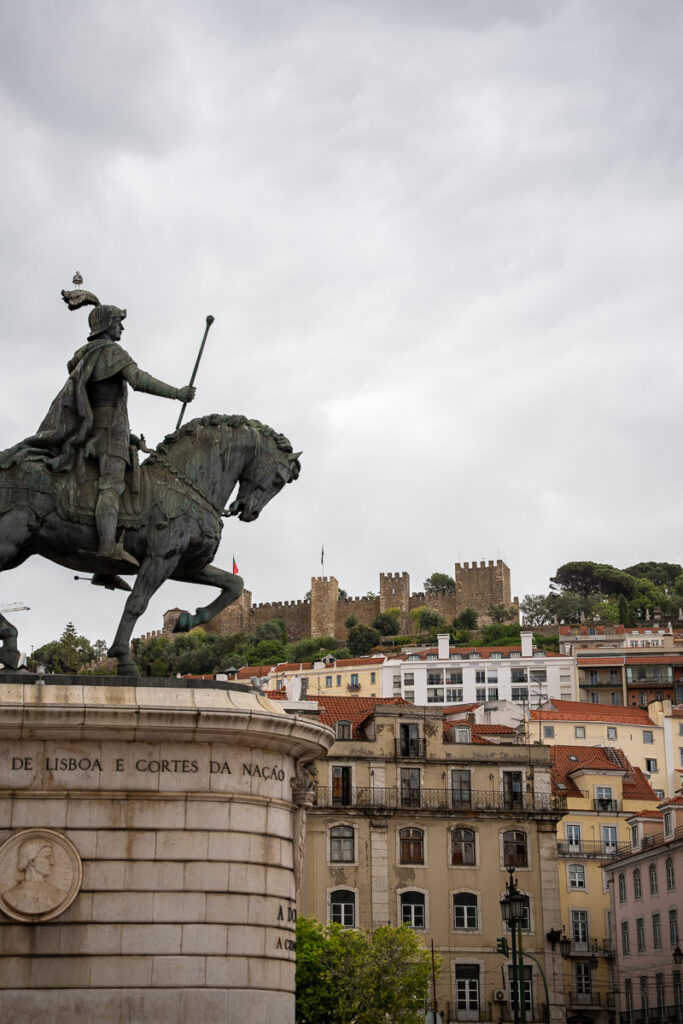
Note: Although we don’t recommend renting a car or driving in Lisbon, if you do, this square is one of the spots where you can find public parking. In addition, this square acts as a central hub connecting to public transportation, and it is exactly where we caught the 737 bus to visit São Jorge Castle.
5. Santa Justa Lift
The Santa Justa Lift is a stunning historical elevator built in 1902 to connect the lower Baixa district with the higher Chiado neighborhood. Operating initially on steam vapor before being upgraded to electric power in the early 1900s, this Portuguese landmark has gained immense popularity among visitors due to its intricate steel structure.
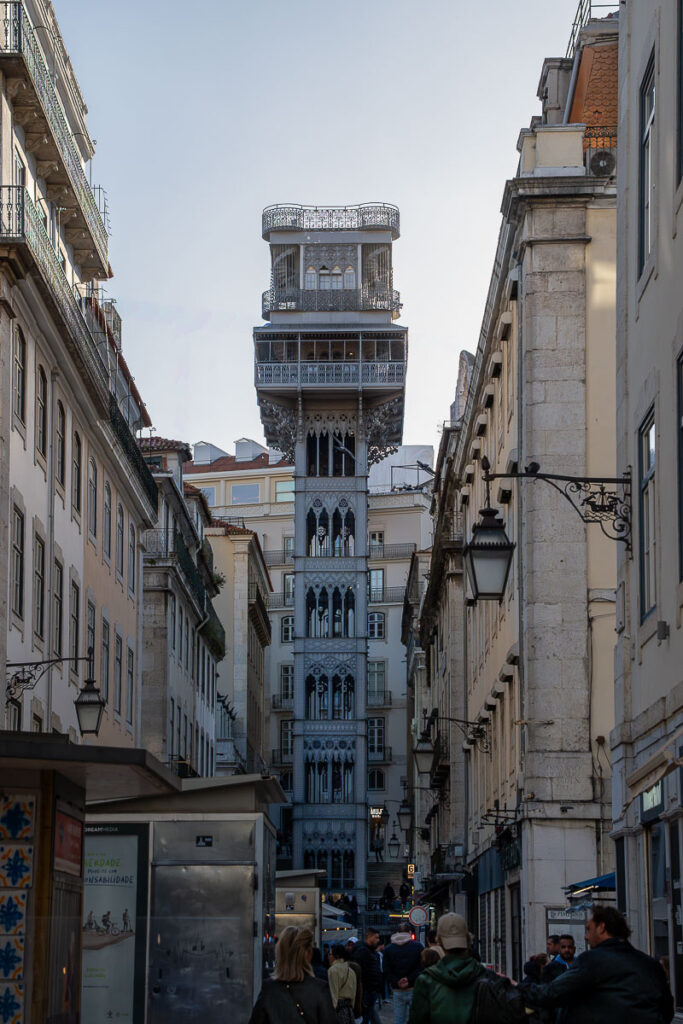
For the best vantage point to admire the elevator from the outside, we recommend viewing it from Rua Augusta. Unfortunately, during our visit, the lift was closed to riders due to a tragic funicular accident that occurred in September 2025, but it is still entirely worth visiting just to admire its impressive exterior architecture from the street.
6. Church of Saint Dominic
From the outside façade, the Church of Saint Dominic seems to be a simple building, causing most tourists to completely overlook entering this fascinating site. However, once you step inside, you will immediately appreciate the deep meaning and symbolism of this church in Lisbon that survived the earthquake. While the building was damaged by the massive 1755 earthquake and subsequently restored, tragedy struck again in 1959 when a fire, which apparently started from a candle in the altar area, swept through, burning everything and destroying the entire interior, including the roof.
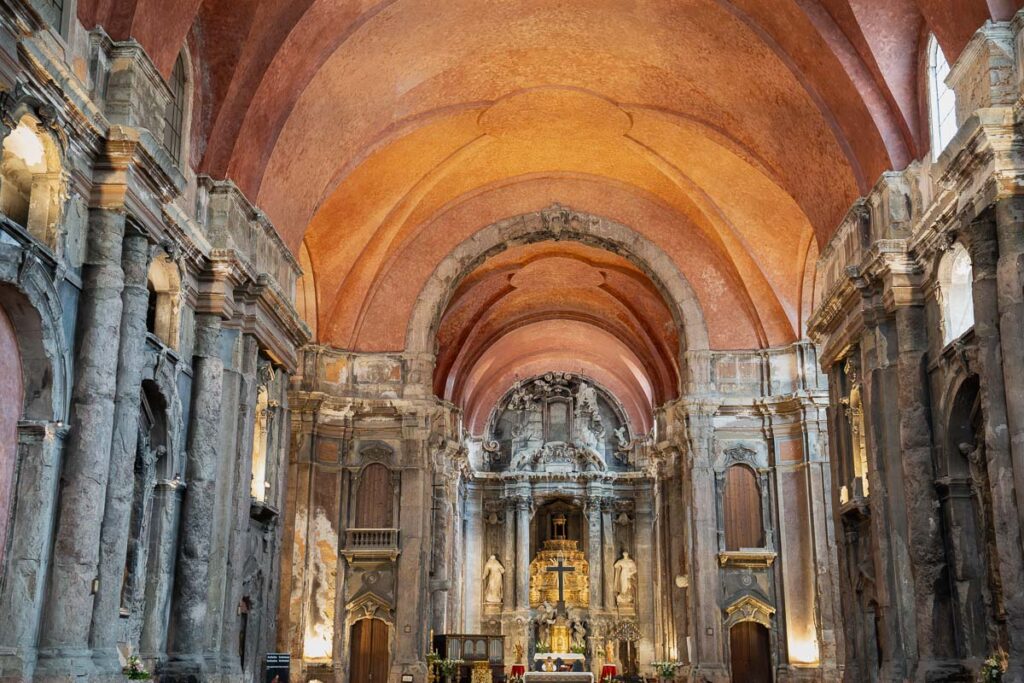
The church was eventually repaired, and a new roof was installed, painted in a striking red color to resemble the historic fire. The original walls and columns, however, remain untouched with visible cracks and burn marks. This raw, damaged aesthetic was intentionally left intact to serve as a powerful testament for future generations, making visiting this church one of the best things to see in Baixa, Lisbon.
7. A Ginjinha
After exploring the church, you only have to look right across the street to find your next stop: A Ginjinha. Ginjinha or ginja is a beloved traditional Portuguese liquor made from sour cherry berries, typically served as a quick, sweet shot.
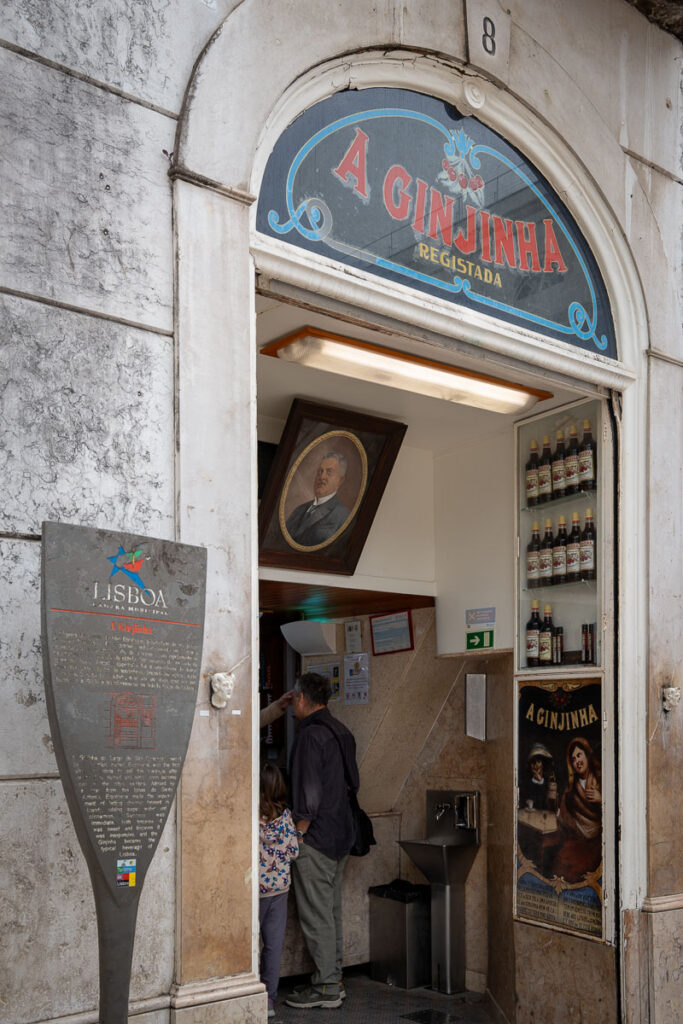
While you will easily find it in various bars, restaurants, and local shops across the city, you absolutely need to stop by this specific location. Why? Because this is the very first place where this famous liquor was ever sold! A Ginjinha is a super small, highly authentic local spot with barely enough room to stand. The tradition is to simply step up to the counter, order your shot of ginjinha, and step back outside to enjoy it on the vibrant street corner.
Chiado District
Just a few minutes’ walk from Baixa, you will find Chiado. The neighborhood gets its name from the poet Antonio Ribeiro Chiado, whose nickname was “Chiado” (which translates to squeak). In contrast to the flat streets of Baixa, Chiado has several hills to explore.
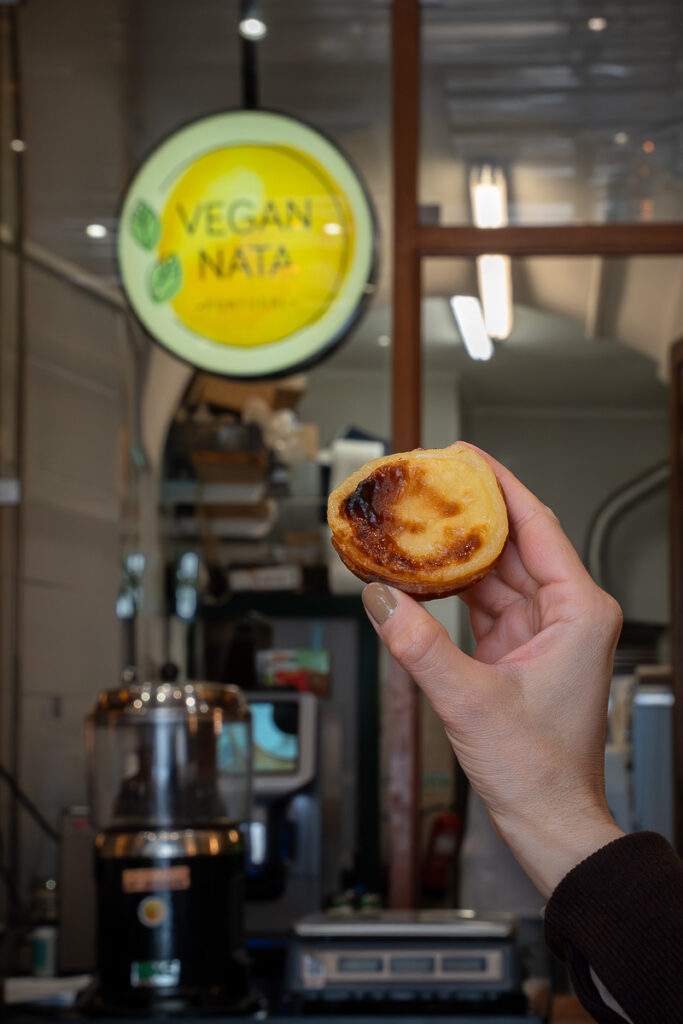
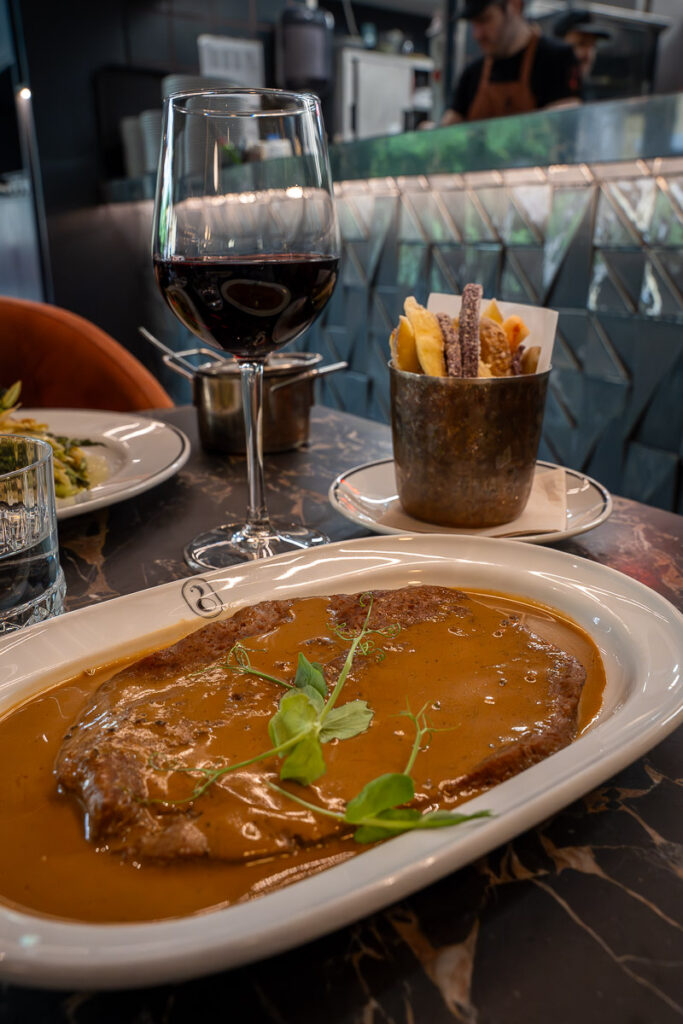
Despite the incline, Chiado was actually our favorite place because there is just so much to see in Chiado, Lisbon. We even found incredible plant-based food here, including vegan versions of traditional Portuguese dishes at Ao 26 Vegan Food Project and an unforgettable dining experience at the Michelin-starred restaurant Encanto. Not to mention that in Chiado you can even grab a plant-based version of the famous pastel de nata at Vegan Nata Chiado.
1. Carmo Convent
The Carmo Convent was a Catholic convent and a church destroyed by the 1755 earthquake, and has now been transformed into a popular historic site and archaeological museum. As soon as you enter, you are greeted by the building’s dramatic remains and the church’s famously missing roof. On the day of the devastating earthquake (November 1, 1755), Lisbon was celebrating the Feast of All Saints.
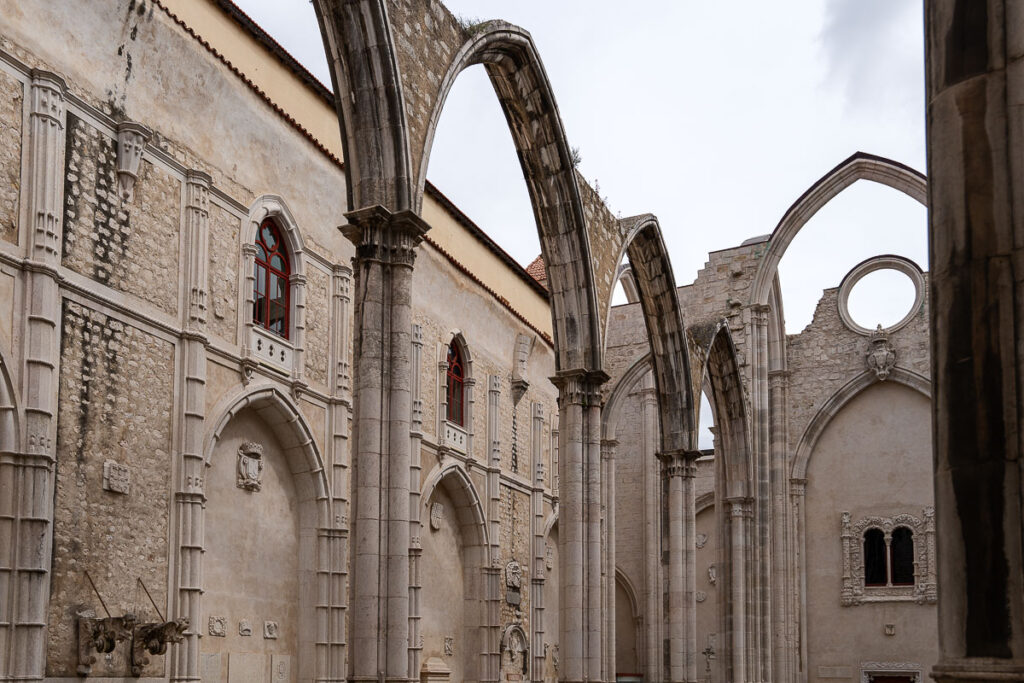
Candles were lit all over the city in celebration, which ultimately caused massive fires to sweep through Lisbon following the tremors. While most of the city’s structures were eventually rebuilt after this catastrophic event, the Carmo church in Lisbon was purposely never repaired. The exposed arches that remain stand as a powerful reflection and a stark reminder of that tragic day in history.
Tip: Since the lines can get super long, we highly recommend making this your first stop in Chiado. Your entry ticket also grants you access to a small museum located in the back of the church.
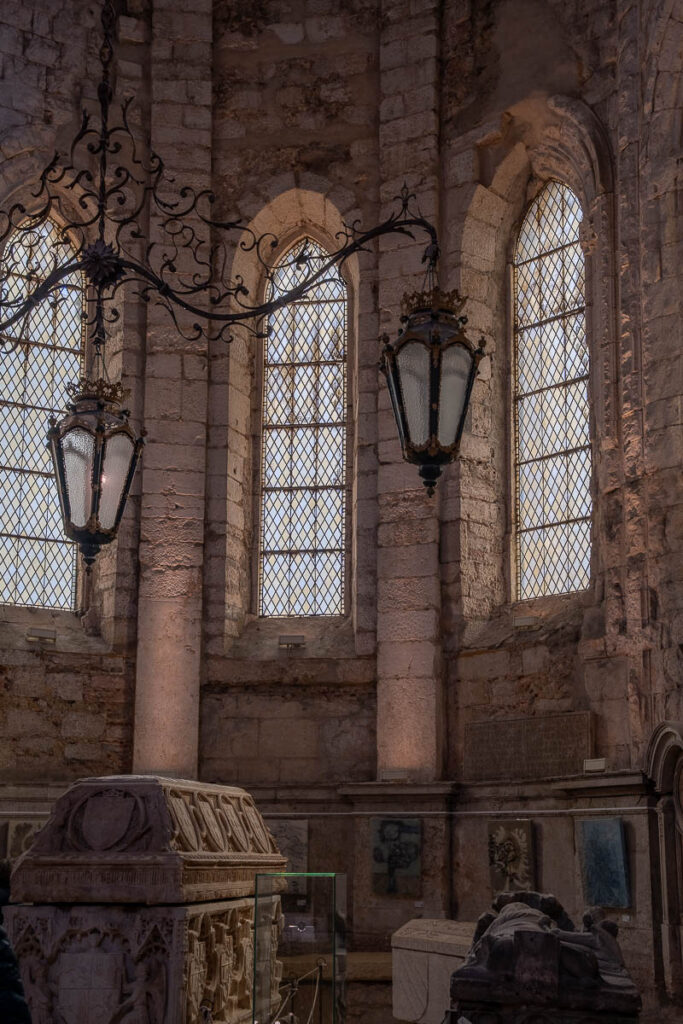
The archaeological museum contains several artifacts from Portuguese history, and the incredibly high interior ceilings in this section will leave your mouth open! Inside, you will find the ornate tomb of King Ferdinand I, a couple of South American mummies, and a small theater projecting a video about the convent’s history directly onto the walls and columns.
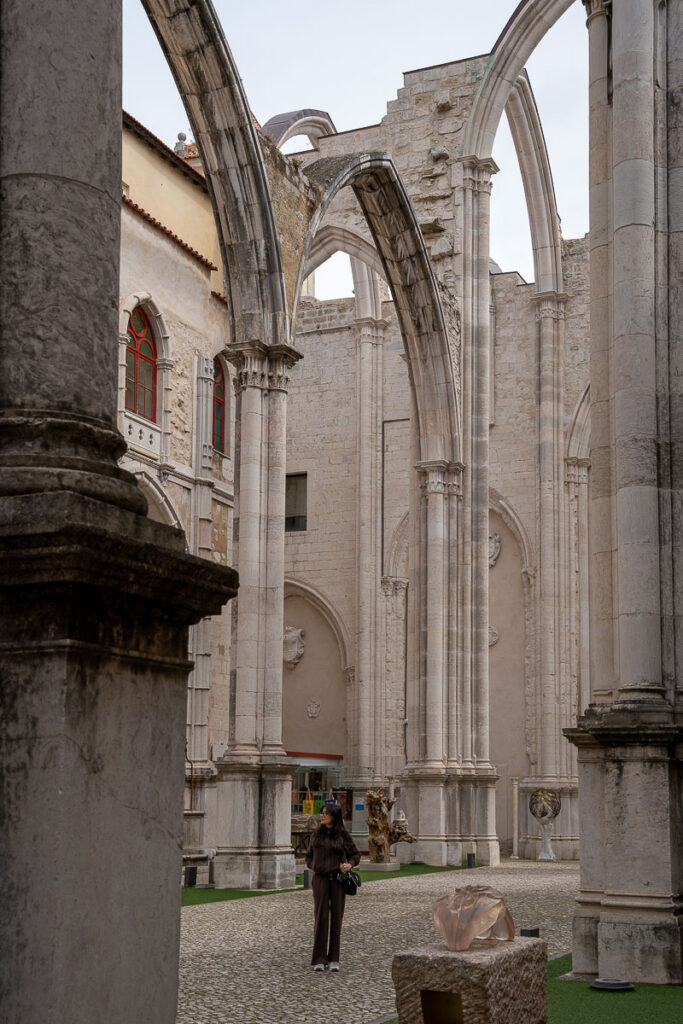
When you are done with your visit, walk outside and follow the path surrounding the right side of the convent. You will get an up-close look at the spectacular Gothic-style façade. If you keep walking toward the back, you are rewarded with beautiful views of Baixa’s terracotta roofs, the top access point for the famous Santa Justa Lift, and even a clear view of São Jorge Castle in the distance.
2. Livraria Bertrand
Livraria Bertrand in Lisbon holds the prestigious title of being the oldest operating bookstore in the world. It officially holds a Guinness World Record for operating continuously since 1732, meaning it was in business even before the big earthquake destroyed a large part of Lisbon in 1755.
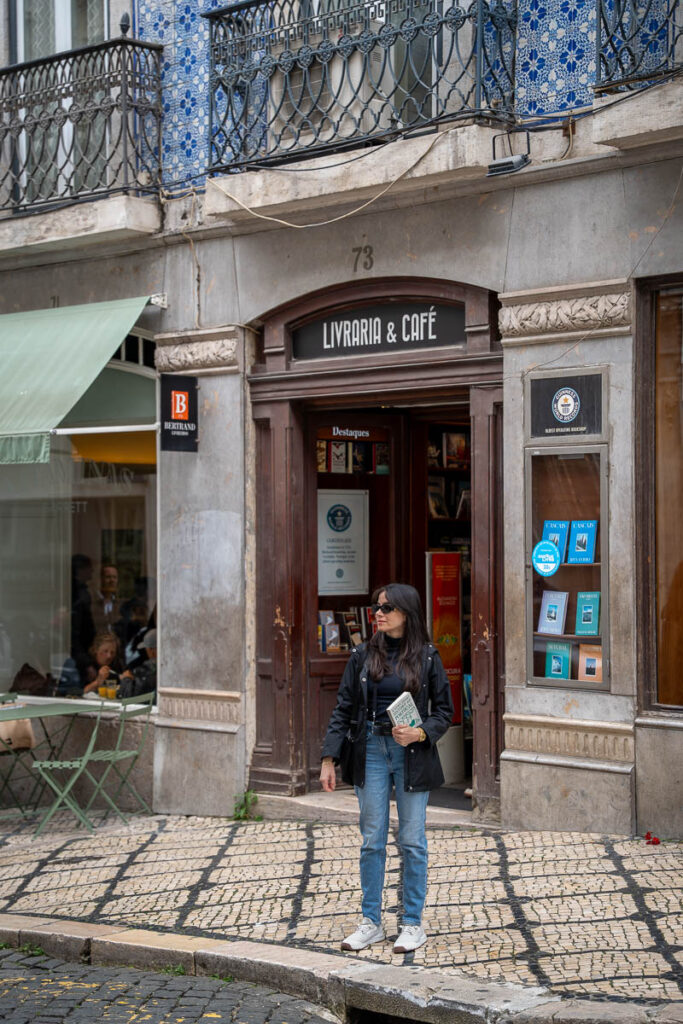
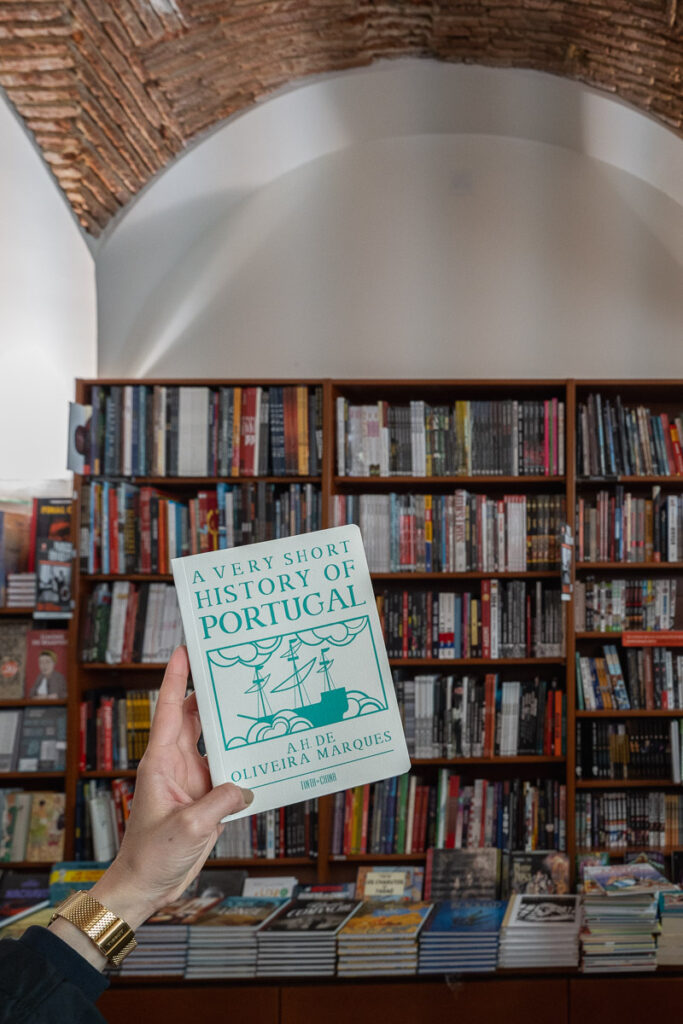
Housed in a beautiful corner building covered with traditional Portuguese blue tiles on the facade, the store features several rooms dedicated to different genres, offering both Portuguese and English books.
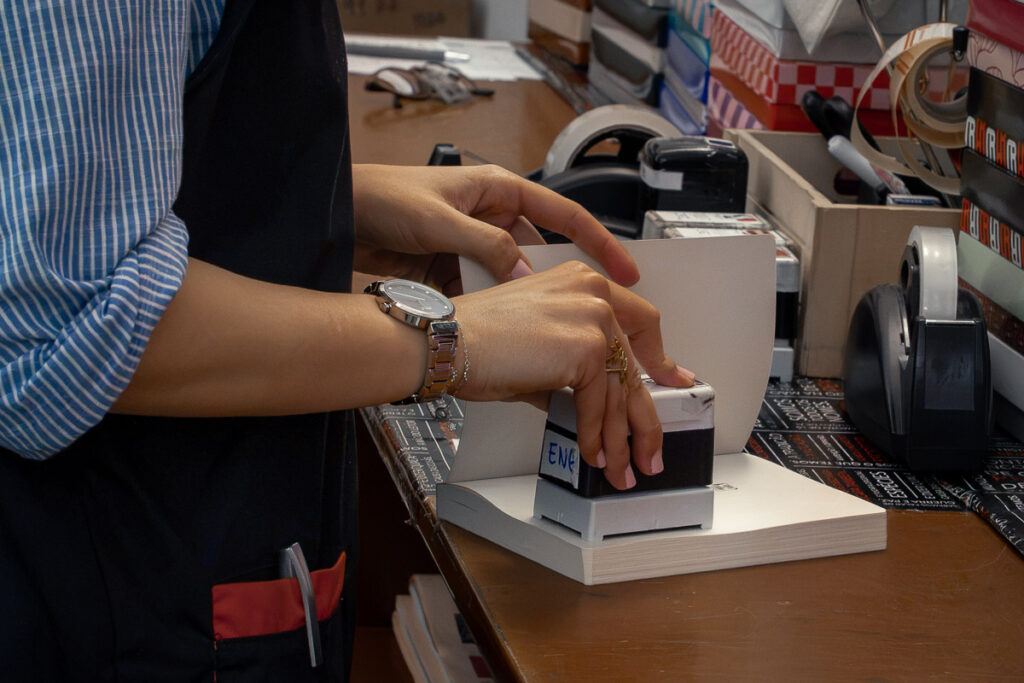
A fantastic souvenir tip: when you buy a book here, you can get the inside cover stamped with the bookstore’s label to mark it as being purchased at this historic location.
Besides traveling, reading is my second hobby, so I was super excited when I learned Lisbon had the oldest bookstore in the world. During my trips, I always try to find remarkable bookstores, like my recent visit to Powell’s City of Books in Portland, Oregon, so this was an absolute must-visit for me. There is a small café at the back of the bookstore, but if you want to grab a coffee, we highly recommend crossing the street and walking just two minutes until you reach A Brasileira.
3. A Brasileira do Chiado
A Brasileira is one of the most beautiful and famous cafés in Lisbon, and it is also famously known as the birthplace of the bica (the Portuguese equivalent of an espresso). The facade is striking, featuring big green doors that lead into a stunning Art Deco interior.
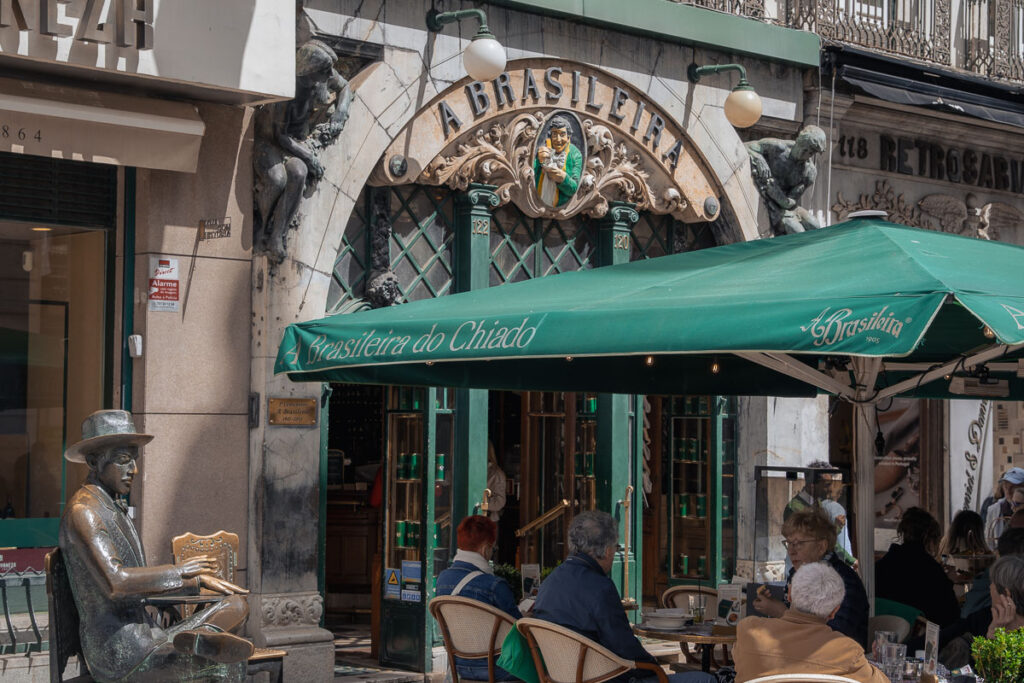
Once you step inside, it truly feels like you are stepping back in time. Besides being the historic birthplace of the bica, this café features a bronze statue of Fernando Pessoa in its outdoor seating area. Pessoa was a famous Portuguese poet and writer who frequently spent time at this very café. It is incredible to know that, in addition to being a renowned poet, he also wrote a Lisbon tourist guide titled “Lisbon: What the Tourist Should See.”
Note: Although Fado music is famously known to originate from the Alfama district, if you are in this area and want to attend a performance, you can book tickets at the Fado in Chiado theater.
What to wear to visit Baixa And Chiado?
During your visit to Baixa and Chiado, you absolutely need to bring comfortable shoes. You will be going up and down hills quite often (especially in Chiado). While Baixa is much flatter, the pedestrian paths everywhere are paved with small cobblestone bricks. We highly recommend bringing non-slip shoes, as these traditional cobblestones can be surprisingly slippery, even when they are not wet.
Where to Stay in Baixa and Chiado?
If you are planning your trip and wondering where to base yourself, we have stayed in both of these central areas before, and we have written detailed reviews of our experiences.
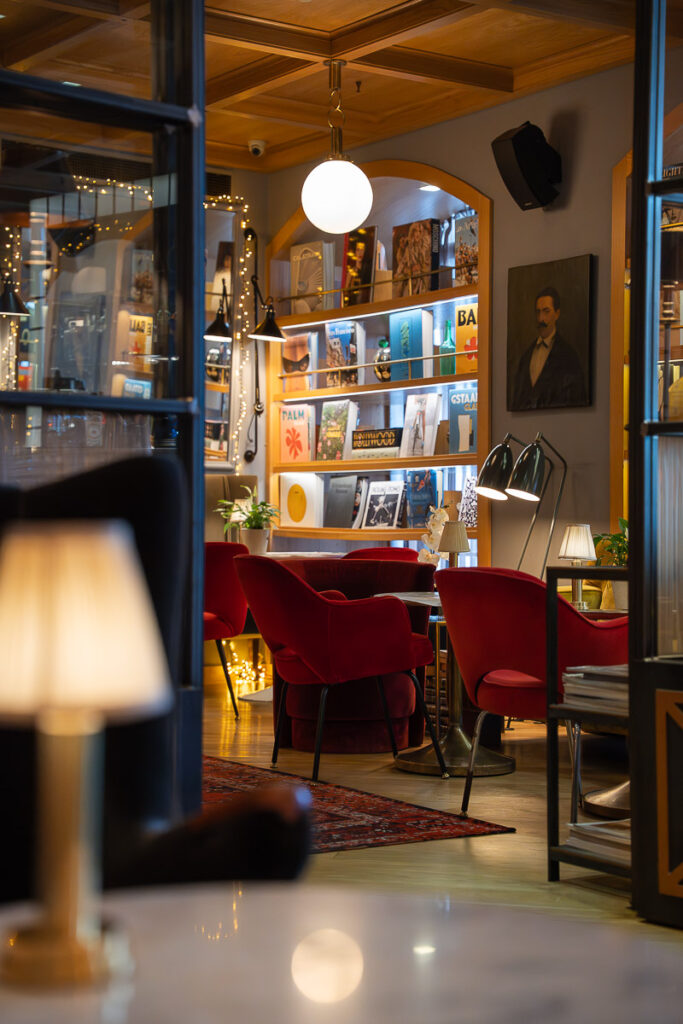
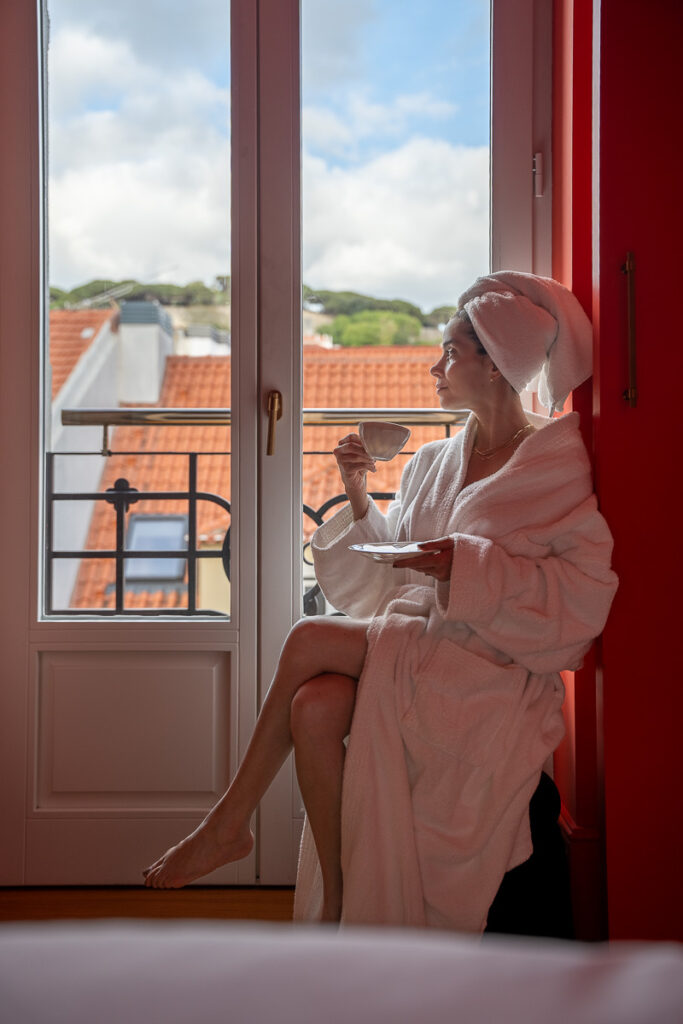
Check out our honest thoughts below to see which hotel best fits your travel needs:
Quick Lisbon Guides:
Found this article helpful? Hover over and save the image below to your Pinterest boards so it’s ready for later. While you’re there, follow me for more inspiration!