What to See in Alfama: The Perfect Lisbon Guide

If you are planning a trip to Portugal and wondering exactly what to see in Alfama, you are in the right place. Alfama has a wealth of history to explore since it is the oldest District of Lisbon. Remarkably, the majority of its buildings survived the devastating 1755 earthquake and tsunami, leaving its colorful buildings feeling frozen in time.
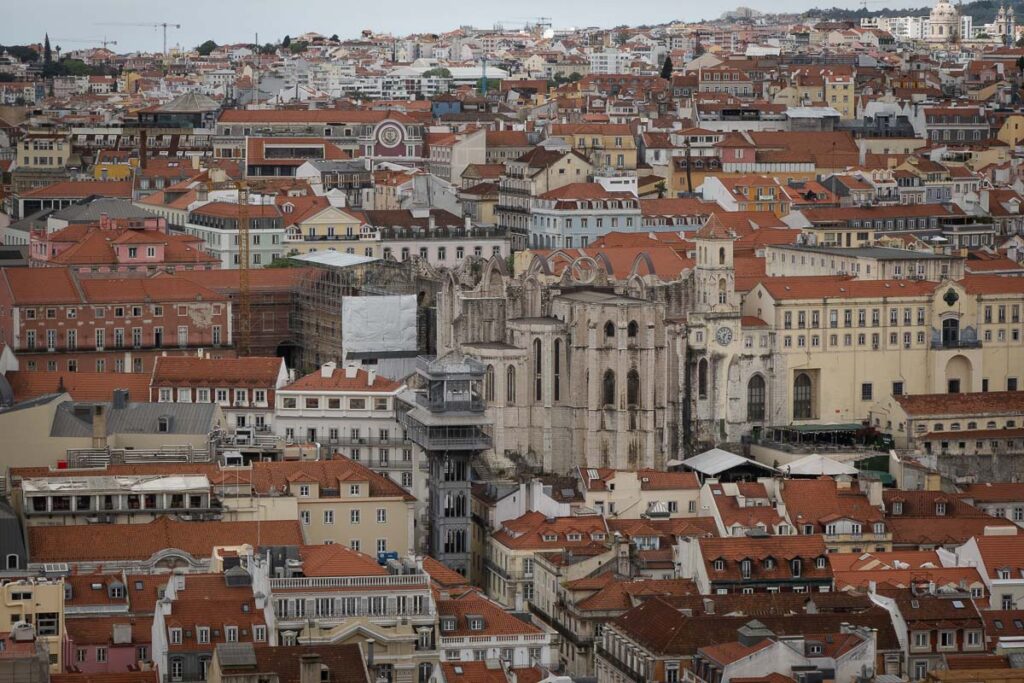
We visited Lisbon for several days to explore this history and discover hidden gems that are mistakenly underrated, like the Roman Theater, which we rarely see mentioned by other travel gurus. This post is a detailed guide of the things that need to be on your radar to ensure you plan for a trip that is absolutely worth the visit.
*This post might include affiliate links, meaning I could earn a commission if you buy through my link, without any additional cost to you. But don’t worry because I only recommend products or services I genuinely believe in and think will add real value to you. Affiliate links help me keep this website up and running. Thanks for your support. Read the Privacy Policy for more information.
Is Alfama worth visiting?
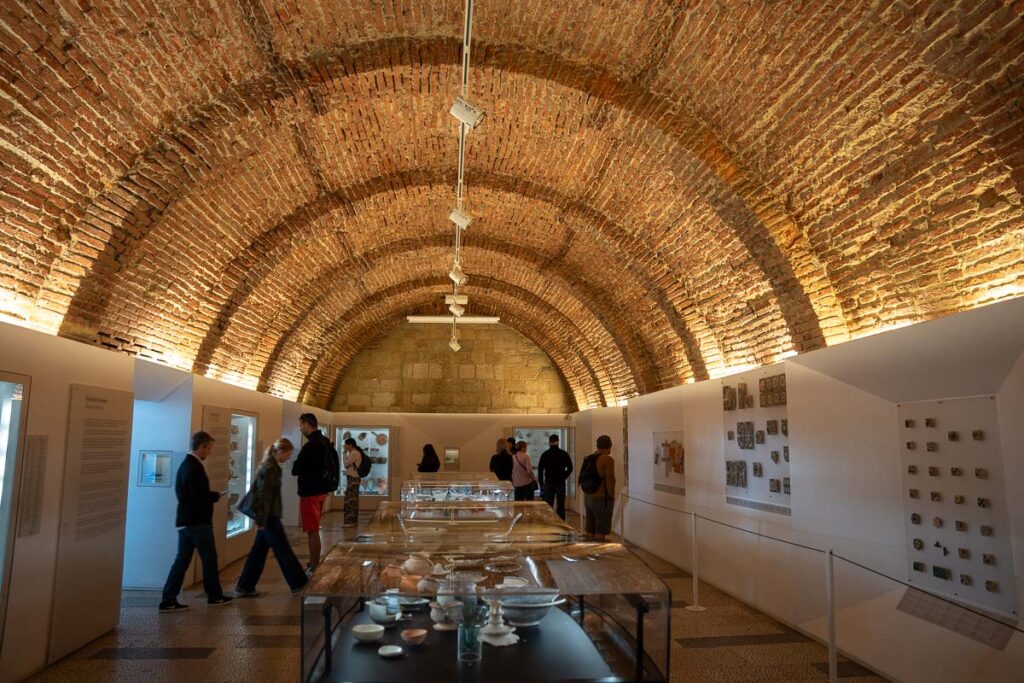
Yes! Alfama is the home of Fado music, filled with up-and-down narrow walking streets and beautiful little restaurants. It is one of the most picturesque neighborhoods in a country that was once one of the world’s greatest maritime powers. Famous for its incredible viewpoints, steep streets, and colorful azulejos (tiles), Alfama is a must-visit for any history lover looking for the best things to do in Lisbon.
How to Get to Alfama Lisbon?
Alfama is located just about 20-25 minutes away from the Baixa district, and about a 20-minute drive from Humberto Delgado Airport.
- By Bus: If you are staying in Baixa, you can take bus 737 from Praça da Figueira, which drops you right at the Castelo arch. (This is how we got there).
- By Rideshare: Another option is to take an Uber or Bolt (local rideshare), which drops you right at the Castelo arch.
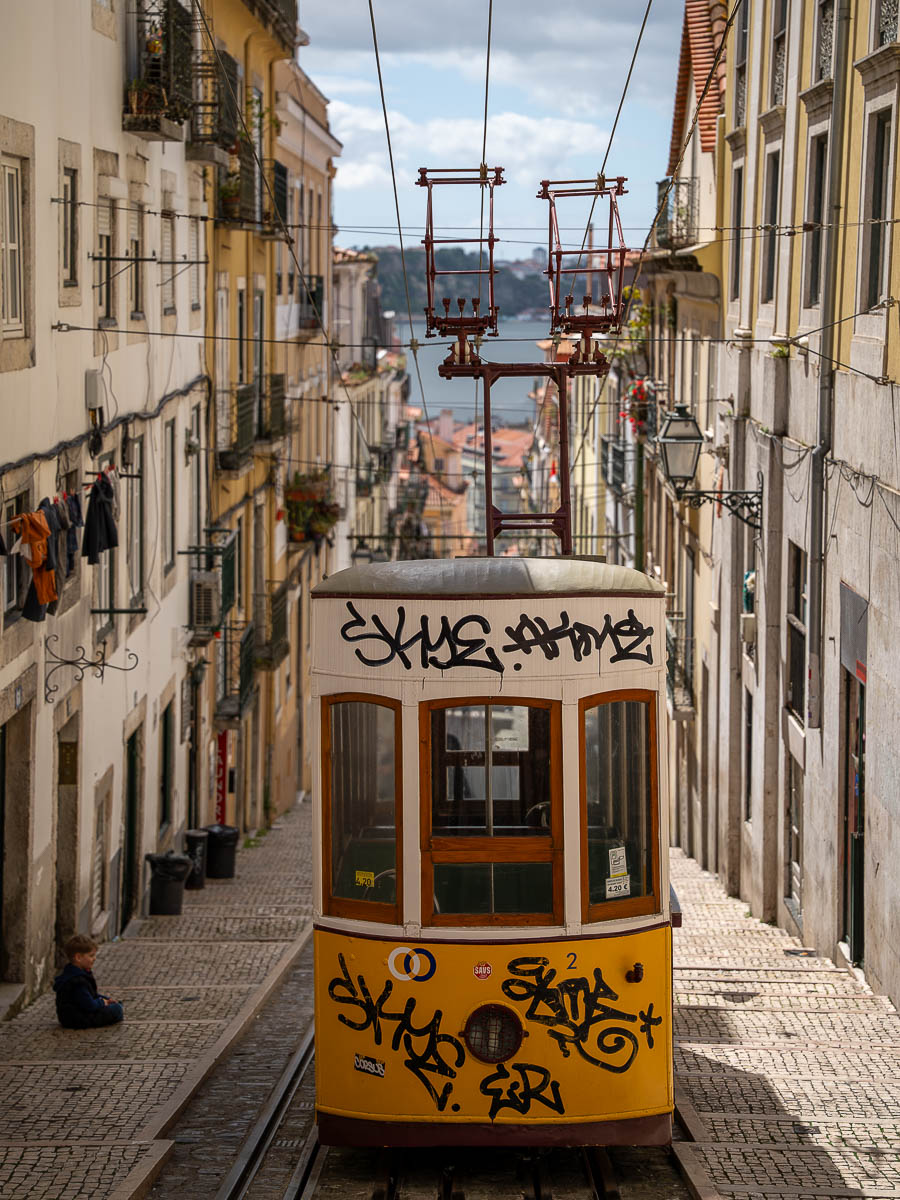
- By Tram 28: You can take the 28 tram, and it will drop you at Alfama. However, it has become a very popular spot for tourists and is not necessarily used just as a means of transportation, so expect long lines.
Tip: If riding the famous vintage 28 tram is on your bucket list, we recommend taking it from the Martim Moniz station (try to catch it at the very first station) and look for the tram heading to Prazeres until the last stop.
How to Get to Alfama from Lisbon Airport?
If you are coming from Humberto Delgado Airport directly to Alfama and you want to use the metro, keep in mind there is no direct train. You will have to change from the Red line to the Blue line (check the Lisbon metro line map here).
Because of this, if you need to visit Alfama straight from the airport with luggage, we do not recommend the metro and instead highly recommend a rideshare.
How to Get Around Alfama?
The best way to move around Alfama is by walking, as you need to climb the streets to reach the most beautiful views. During your visit, you are going to get a lot of leg workouts, so comfortable, non-slippery shoes are a must.
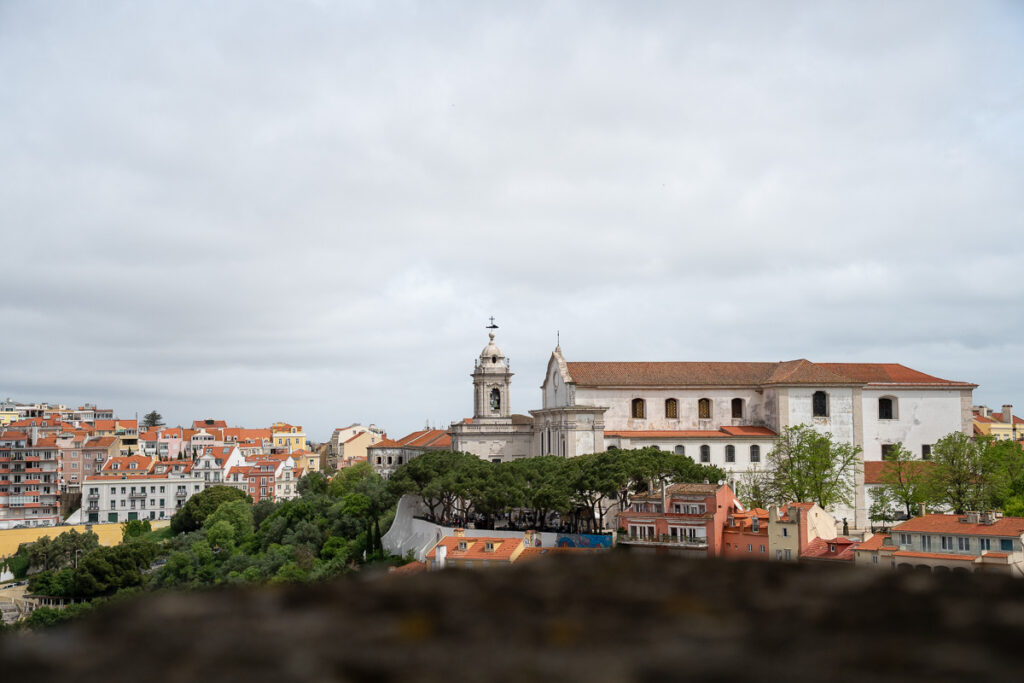
The pedestrian paths are made with small cobblestones and tend to be super slippery, even if it is not raining! If you are wondering where to go in Alfama Lisbon without getting exhausted, we highly recommend starting at the top near the castle and walking your way down.
What to See in Alfama: The Ultimate Guide
Here is our list of the best places to visit. They are not in a particular order, but our top recommendation is to visit the castle and the miradouros early in the morning, which is what we did. If not, you can opt for a late afternoon visit because they get super popular. All the other spots can be visited at a slightly more relaxed pace.
Castelo de São Jorge (St. George’s Castle)
- Open: Daily from 9 AM – 9 PM
- Ticket: Starting at $30
- If you decide to walk from Baixa to the castle, there is a free elevator that connects Baixa to the castle area to save you some stairs.
If you arrive without a ticket, you can waste a lot of time in line. You will have to purchase a ticket. This popular skip-the-line e-ticket includes a digital audio guide. Just remember to download the app ahead of time and bring your headphones
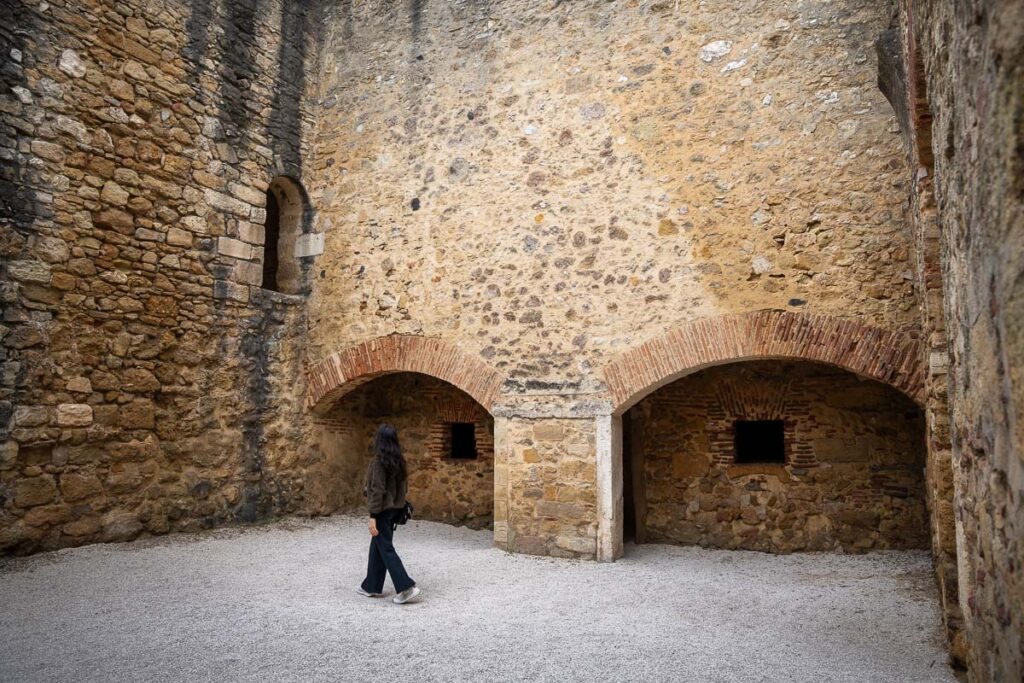
This historic fortress was built by the Moors, later became a royal palace, and then a military barracks. After the earthquake, it remained abandoned until the 20th century, when it was restored as a national monument (what you see today is a replica of what was restored in the 1930s to give tourists a glimpse of the past).
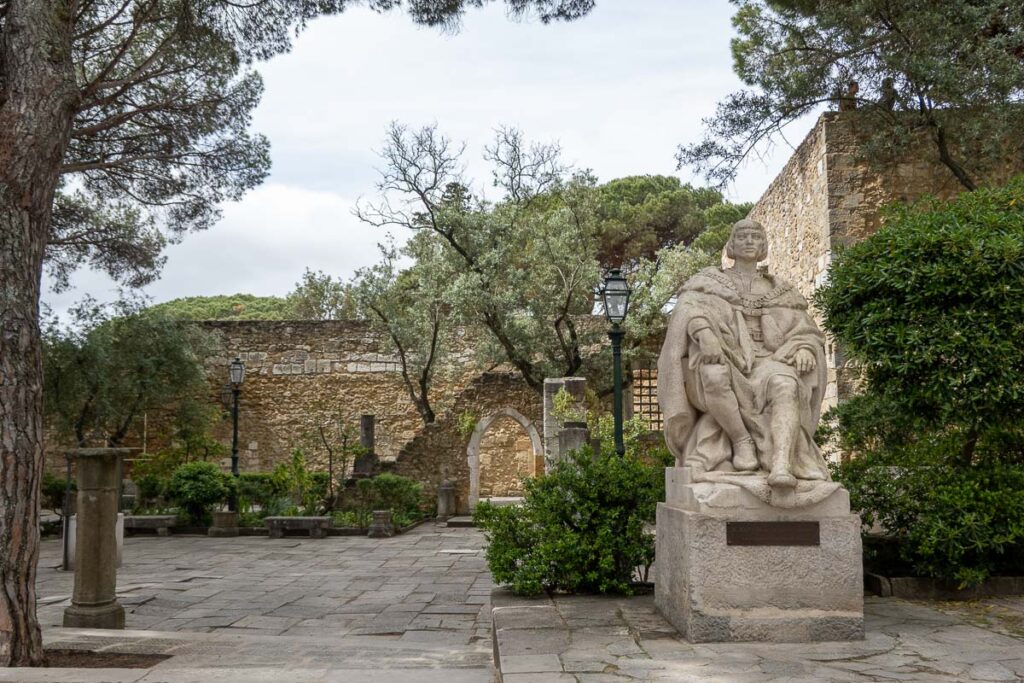
The castle is full of nature and, in my opinion, has the best views in Portugal from the main terrace area. Inside, you’ll find thick and steep stairs you can climb, an archaeological site with the remains of the royal palace, and a small museum with objects from the Islamic period. One of the 11 towers even hosts a dark chamber with a periscope where you can see a real-time 360-degree view of Lisbon.
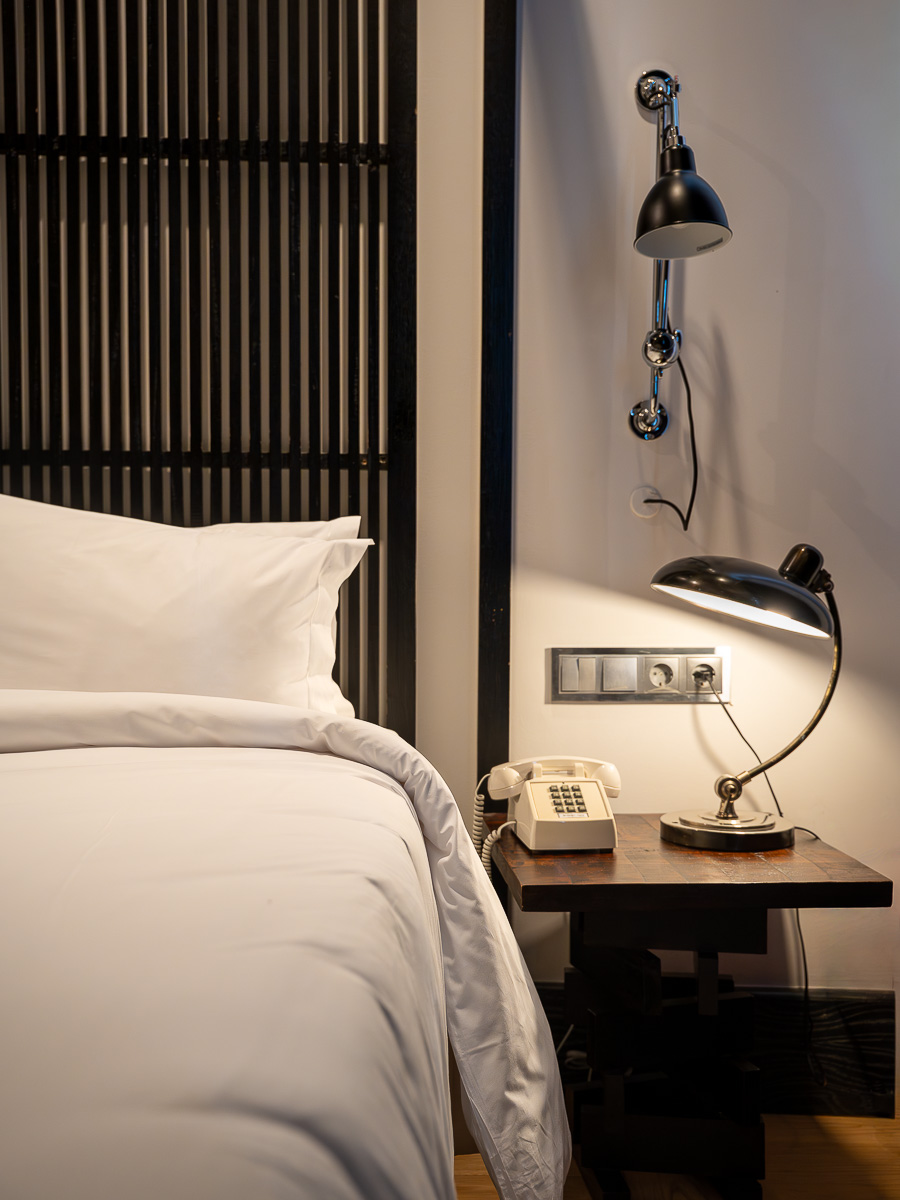
Read More: When we stayed at the Art Legacy Hotel (a Michelin Key hotel), we had an incredible view of Castelo de São Jorge. Read our honest Art Legacy review to see if it fits your stay needs.
Alfama Viewpoints (Miradouros)
They say Lisbon is built on seven hills, and with these hills, you will find beautiful miradouros—which simply means “viewpoints” in Portuguese.
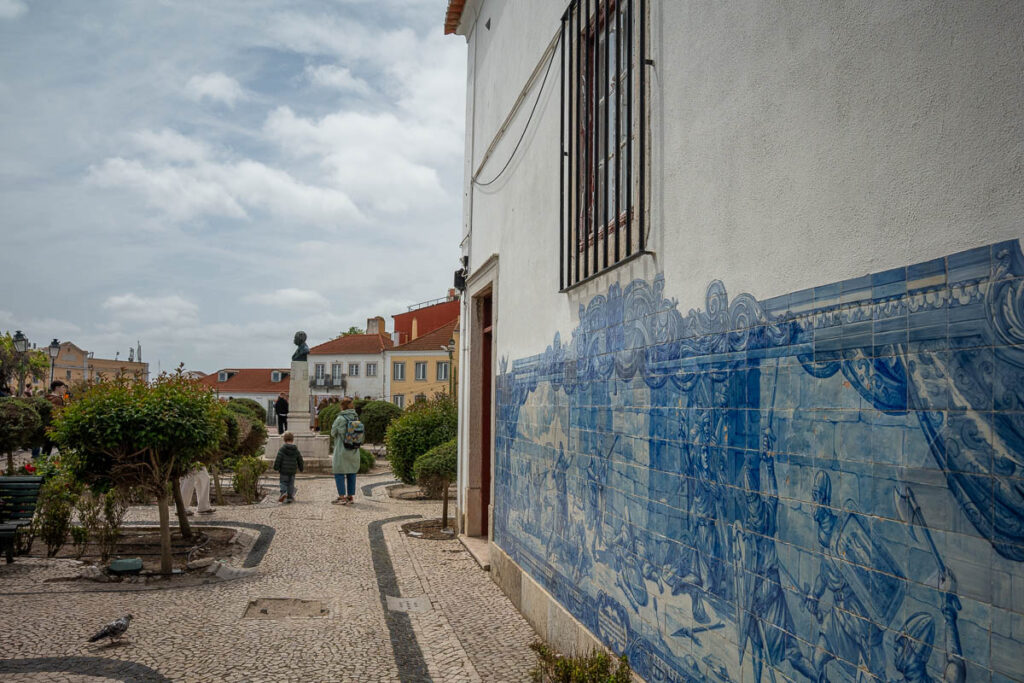
Besides offering spectacular views over the terracotta roofs and the river, these viewpoints often feature live acoustic music and little shops selling souvenirs. Expect to share the space with other tourists as you take in the scenery. Here are the two you cannot miss:
Miradouro de Santa Luzia Lisboa
- Open: 24 hours (Public space)
- Ticket: Free
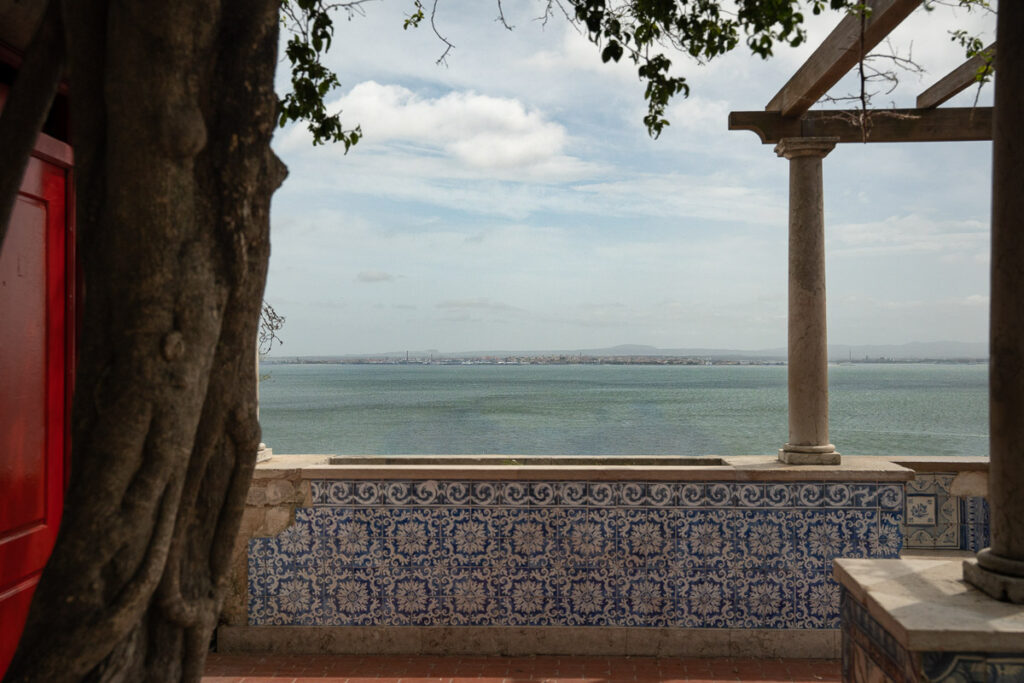
It features beautiful pergolas covered with bougainvillea flowers, a balcony overlooking the Tagus River, and walls covered in iconic blue tiles. It was originally the garden of the Santa Luzia church. It is super popular, and you’ll find lines of people trying to get a photo of the impressive view, so visit early in the morning or at sunset for the best shots.
Miradouro das Portas do Sol
- Open: 24 hours (Public space)
- Ticket: Free
Located right next door to Santa Luzia, this is another spot you cannot miss. There is a wide patio where you can take in the beautiful view. From here, you can see the iconic terracotta roofs of the buildings blending perfectly with the river.
History of Lisbon Mural by Nuno Saraiva
- Open: 24 hours (Public space)
- Ticket: Free (mural is in the public corridor)
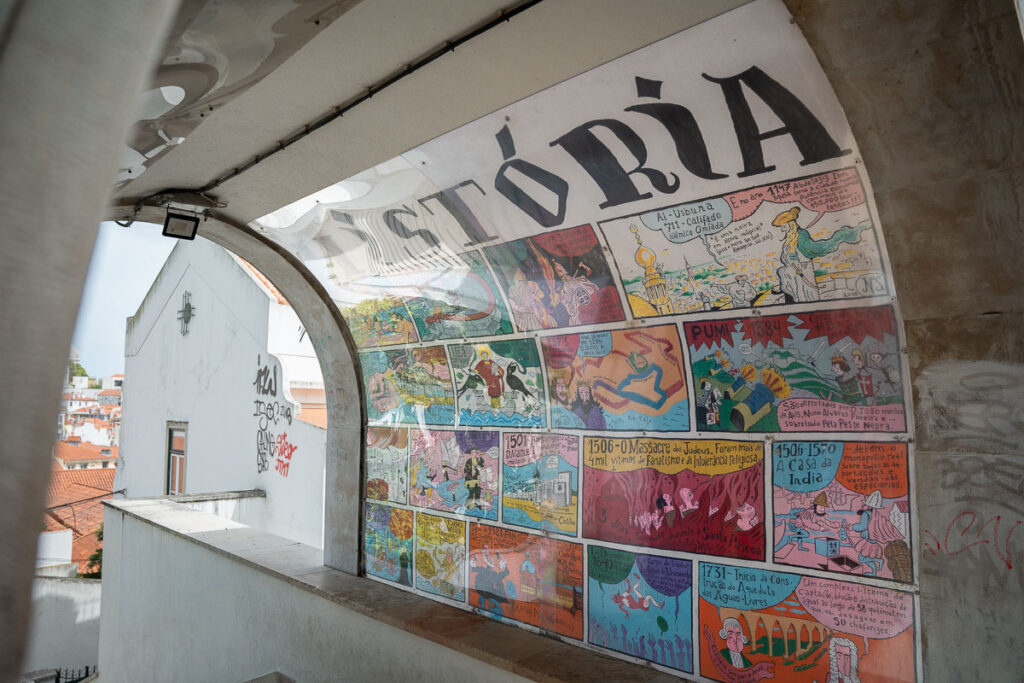
Underneath the Portas do Sol viewpoint, in a tunnel that leads to the public water closet, you will find a beautiful and educational mural by Nuno Saraiva. It uses an interesting comic style to showcase the city’s history, highlighting interesting facts from its origins all the way to the revolution.
Fado Museum
- Open: Tuesday to Sunday from 10 AM – 6 PM
- Ticket: Starts at €5.00, Free with Lisboa Card
Alfama is where the typical Portuguese music called Fado was born. The area was full of sailors, which is why Fado, a melancholic, soulful, and emotional music originally sung by sailors, is so popular here. If you love to discover artists and learn history, this is an Alfama must-see.
Unfortunately, we couldn’t visit the museum because it was under major renovations, but most visitors highlight it as a great place to learn about Fado’s origins and local legends.
Note on Fado shows: While large Fado shows have become more of a tourist activity today, you can still find small, intimate restaurants offering authentic Fado music. Fado uses beautiful guitar melodies and expressive lyrics. It is not considered background music, so if you attend a live performance, talking is heavily frowned upon.
Sé de Lisboa (Lisbon Cathedral)
- Open: Monday to Saturday from 10 AM – 6 PM (Closed Sundays)
- Ticket: Access to the main church is free. Visiting the high choir and the treasury rooms on the second floor requires a ticket starting at $8.
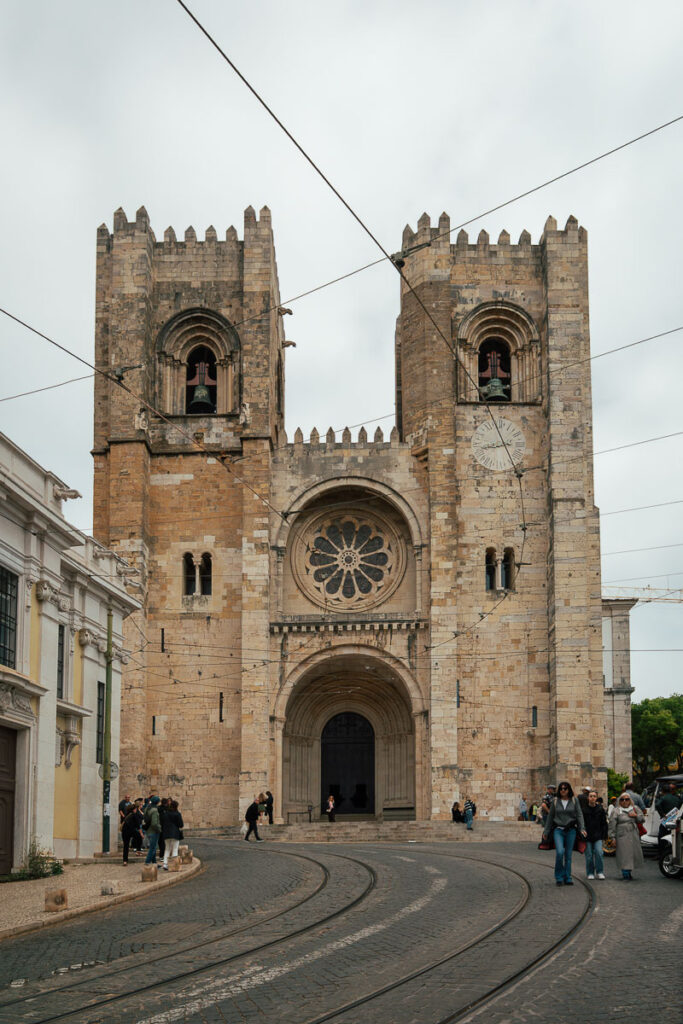
The Sé is the oldest church in the city, famously commissioned by King Afonso Henriques (the first King of Portugal) and built by Christian crusaders. Prior to the crusades, the area was Muslim.
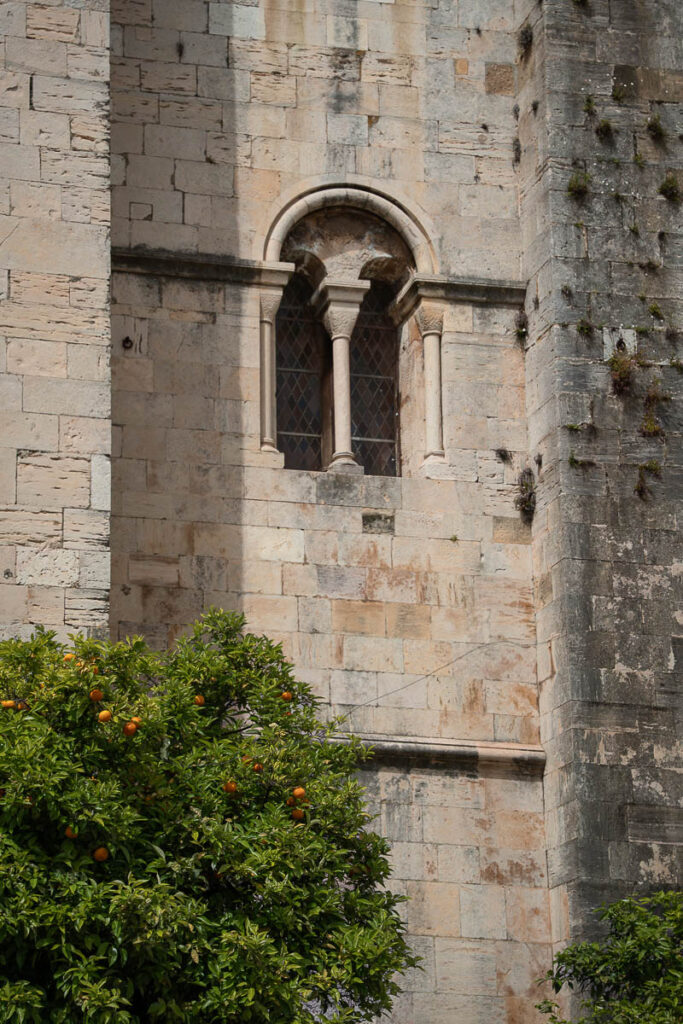
It survived the earthquake and is the burial place of the seventh king of Portugal, King Afonso IV, and his wife, D. Beatriz. The treasury rooms on the second floor display historical jewelry and dresses. Remember to wear appropriate clothing for a religious building!
Roman Amphitheatre Lisbon (Roman Theater)
- Open: Tuesday to Sunday from 10 AM – 6 PM
- Ticket: Starts at €5, Free with Lisboa Card (Self-guided visit)
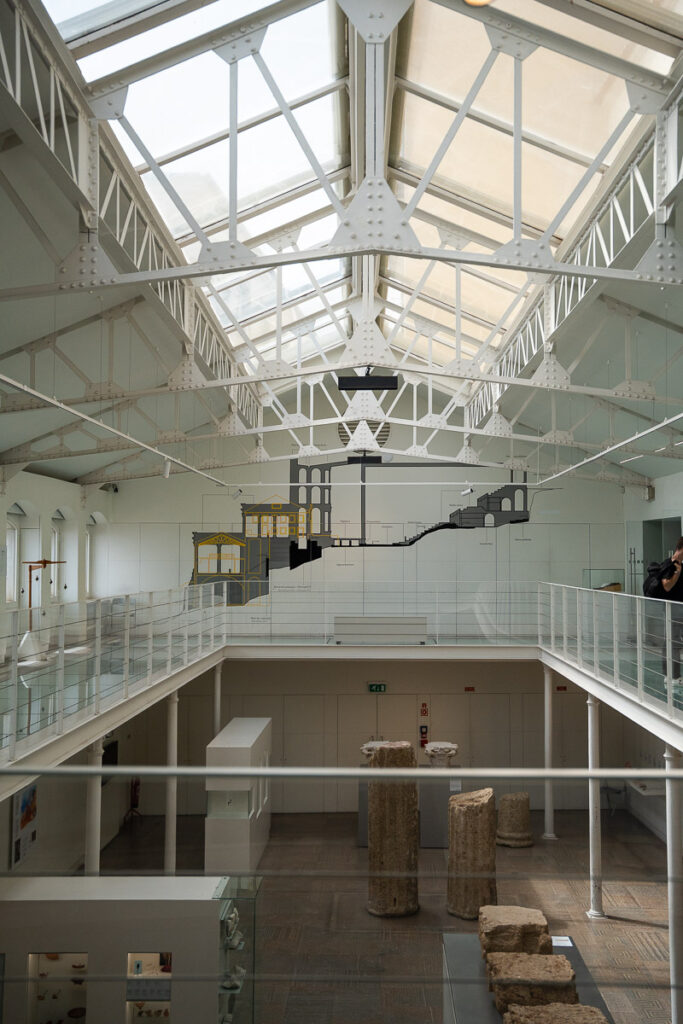
The Roman Theater was a symbol of power and a mark of Roman dominance, built during the era of Emperor Augustus. It remained buried underneath the city for decades and didn’t resurface until the rebuilding phase after the great earthquake.
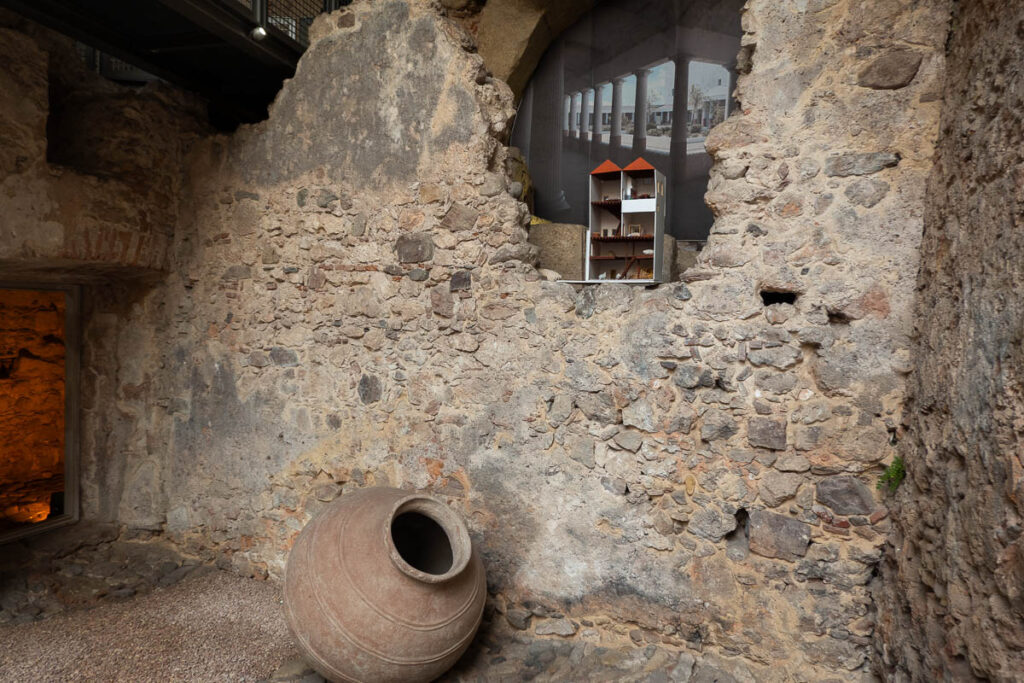
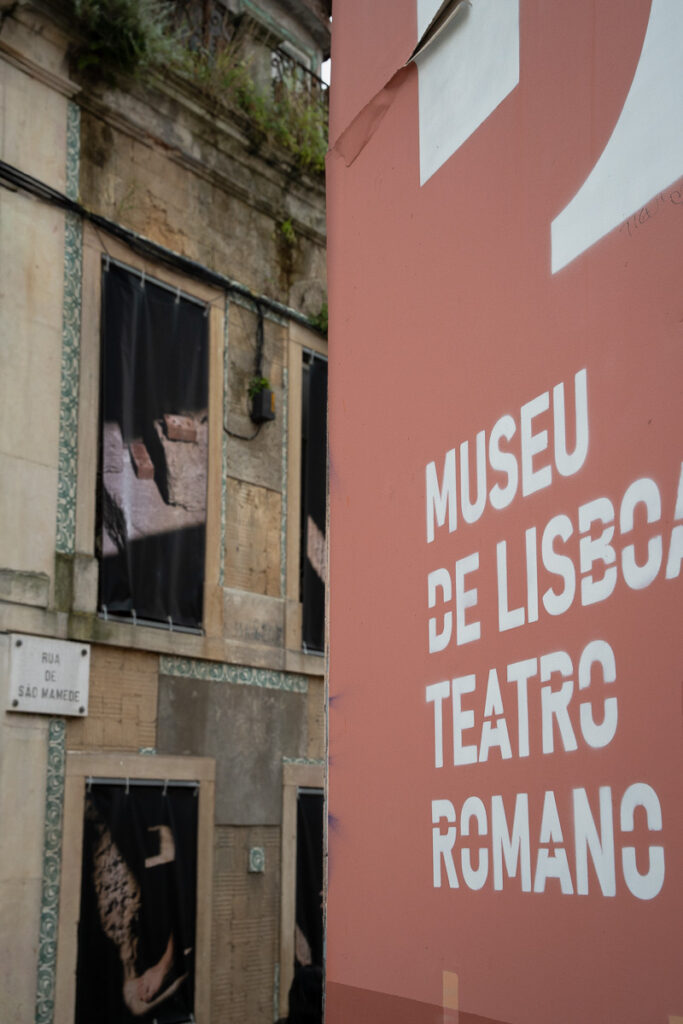
Outside the museum, you can see the semicircular theater with the spectator seats; this part of the museum is free to see. Inside, there is a small museum where you can view ancient columns, archaeological artifacts, and the history of when it was discovered. We found this visit very interesting and think this museum is highly underrated.
Feira da Ladra
- Open: Tuesdays and Saturdays from 9 AM – 6 PM
- Ticket: Free entry
Feira da Ladra is the popular flea market in the area. You will find vintage clothing, antique collections, and handmade souvenirs, making it perfect for anyone looking to buy local or vintage items. As you walk around Alfama, you will notice a lot of buildings covered in beautiful tiles called azulejos.
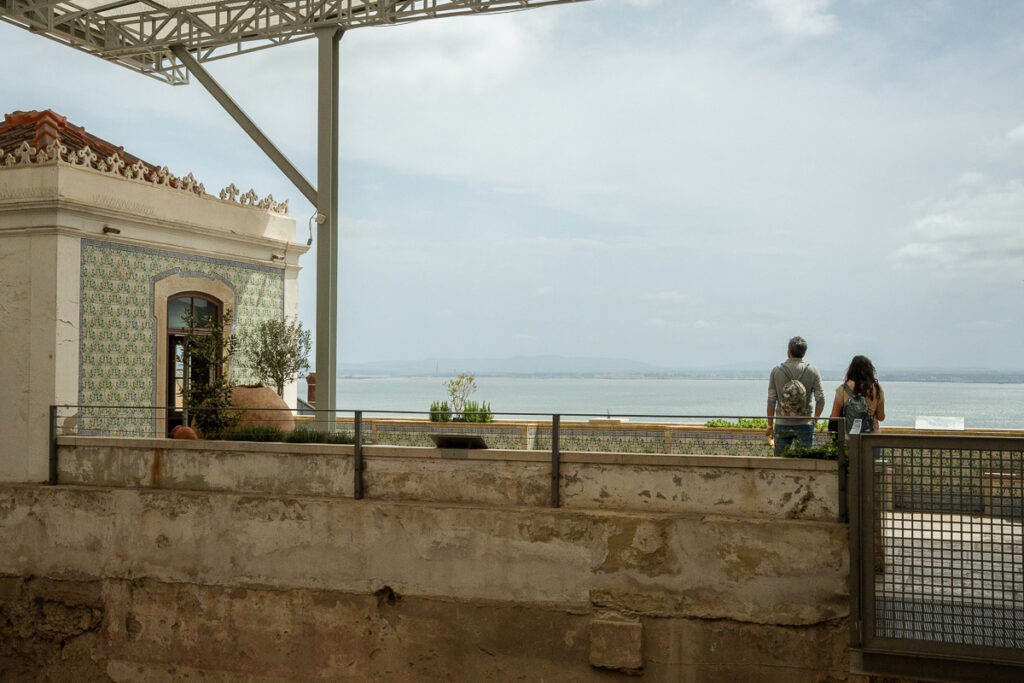
The word azulejo comes from Arabic, meaning “polished stone,” and these tiles have been used for centuries to tell narratives and history. A word of caution: if you want to buy traditional tiles at the market, ensure they are handmade or certified. Avoid buying antique tiles here, as they might have been stolen from historic buildings.
National Pantheon (Panteão Nacional)
- Open: Tuesday to Sunday from 10 AM – 6 PM
- Ticket: Starts at €4, Free with Lisboa Card
The building took around two centuries to complete. It originally started as a church before becoming the Pantheon, where the remains of Portugal’s most illustrious and important figures are buried. It is a beautifully solemn place to visit to pay respects to the history makers of Portugal.
Read More: Looking for plant-based food during your explorations? We visited Al Sanpietrino Trattoria right here in Alfama, which is the first fully plant-based Italian restaurant in Lisbon. Check out our experience on this restaurant and other vegan restaurants in Lisbon.
Casa dos Bicos Lisboa
- Open: Monday to Saturday from 10 AM – 6 PM
- Ticket: Starting at €4.00
Built in the 16th century, this building survived the 1755 earthquake and is famous for its interesting, organic façade made of diamond-shaped stones. It is currently home to the José Saramago Foundation (the 1998 Nobel Prize winner in Literature), making it a must-visit if you are in the literature vibe.
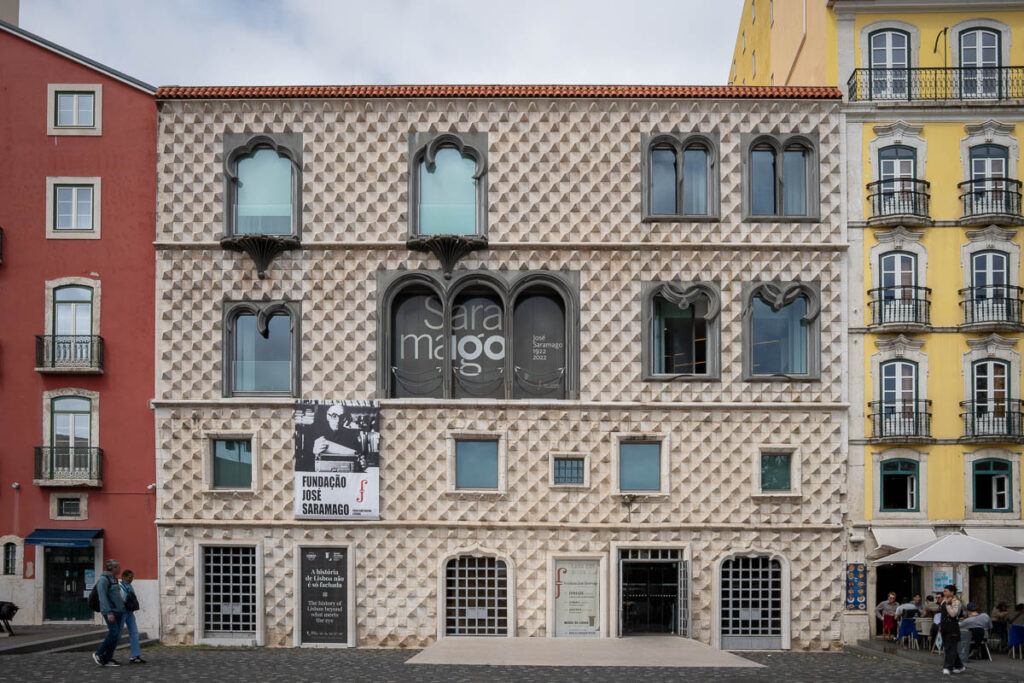
The remains of José Saramago rest under an olive tree at the foot of the building. Inside, you will find his books, manuscripts, furniture, and the typewriter he used. Even if you are not interested in the literary exhibits inside, the unique diamond-shaped exterior facade is absolutely worth appreciating from the outside during your walk through Alfama.
Tip: If you want to get deeper into the history and culture, booking a guided walking tour is an excellent idea to fully appreciate what you are looking at.
How Many Days Do You Need?
We dedicated one full day to exploring and were able to visit the castle, the two miradouros, the Sé Cathedral, the Roman Theater, the public bathroom mural, and Casa dos Bicos without rushing.
However, we wish we had more time because there were still spots on this list we couldn’t fit in. To see everything Alfama has to offer, you will definitely need more than one day.
Overall Things to Do in Alfama
Alfama impressed me a lot; I now understand why its winding alleys and history have made it such a massive tourist destination in recent years. Because it is located up on the hill away from the modern grid, the best thing to do is just get lost in its streets.
Take time to soak in the sights of everyday life, like clothes hanging from the local houses, the sound of acoustic guitars, and the smell of fresh food, and you will truly understand the heart of Lisbon.
Keep Exploring Portugal:
If you loved this guide, stick around! Check out these resources to help plan the rest of your trip:
Keep an eye out for our upcoming deep dives into how to maximize the Lisboa Card!
Found this article helpful? Hover over and save the image below to your Pinterest boards so it’s ready for later. While you’re there, follow me for more inspiration!